Dark means having little or no light. Imagine walking into a room during a power outage. You cannot see clearly because the room is dark. This simple situation shows how commonly the word is used in daily life.
The word dark appears in conversations, books, movies, news reports, and creative writing. It can describe a place, color, mood, idea, or situation.
Learning synonyms of dark is important for English learners and content writers. Using different words helps improve vocabulary, makes writing more interesting, and avoids repeating the same word again and again.
In this article, you will learn the meaning of dark, its pronunciation, history, grammar, connotation, and 30 powerful synonyms with examples. You will also discover categories of synonyms, antonyms, and useful questions and answers to strengthen your English skills.
Meaning of Dark
Dark (Adjective):
Having little or no light; difficult to see because light is absent.
Examples
- The room became dark after sunset.
- We walked through a dark tunnel.
Connotative Meaning
- Positive tone: Mysterious, elegant, rich, dramatic.
- Negative tone: Scary, gloomy, depressing, dangerous.
- Neutral tone: Simply lacking light.
Etymology
- Source Language: Old English
- Original Form: deorc
- Original Meaning: Without light, obscure, hidden
Short History of the Keyword
- Old English (450–1100): Used as deorc meaning lacking light.
- Middle English (1100–1500): Spelled as derk and dark.
- Modern English (1500–Present): Became the standard form dark and gained additional meanings related to sadness, secrecy, and evil.
Pronunciation (US & UK – IPA)
- US: /dɑːrk/
- UK: /dɑːk/
Syllables
- dark
Affixation Pattern of Dark
Root: dark
Prefix: None
Suffix: None
Word Formation of the Keyword
- Darkness (Noun)
- Darken (Verb)
- Darkened (Adjective/Verb)
- Darkly (Adverb)
- Darkish (Adjective)
- Darkening (Noun/Verb)
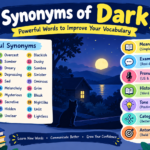
30 Synonyms of Dark
1. Dim (Adjective)
US: /dɪm/ | UK: /dɪm/
Meaning: Having only a small amount of light.
Examples:
- The restaurant had dim lighting.
- A dim lamp stood beside the bed.
2. Gloomy (Adjective)
US: /ˈɡluːmi/ | UK: /ˈɡluːmi/
Meaning: Dark and depressing.
Examples:
- The sky looked gloomy before the storm.
- The old house felt gloomy.
3. Shadowy (Adjective)
US: /ˈʃædoʊi/ | UK: /ˈʃædəʊi/
Meaning: Filled with shadows.
Examples:
- We entered a shadowy forest.
- A shadowy figure appeared.
4. Murky (Adjective)
US: /ˈmɜːrki/ | UK: /ˈmɜːki/
Meaning: Dark and difficult to see through.
Examples:
- The water was murky.
- Murky conditions slowed traffic.
5. Dusky (Adjective)
US: /ˈdʌski/ | UK: /ˈdʌski/
Meaning: Slightly dark.
Examples:
- The evening became dusky.
- We enjoyed the dusky landscape.
6. Obscure (Adjective)
US: /əbˈskjʊr/ | UK: /əbˈskjʊə/
Meaning: Not clear or easily seen.
Examples:
- The object remained obscure.
- Details were obscure in the darkness.
7. Black (Adjective)
US: /blæk/ | UK: /blæk/
Meaning: Completely dark in color.
Examples:
- The sky turned black.
- She wore a black coat.
8. Unlit (Adjective)
US: /ʌnˈlɪt/ | UK: /ʌnˈlɪt/
Meaning: Not illuminated.
Examples:
- The street was unlit.
- We crossed an unlit road.
9. Opaque (Adjective)
US: /oʊˈpeɪk/ | UK: /əʊˈpeɪk/
Meaning: Not allowing light to pass through.
Examples:
- The glass was opaque.
- Opaque curtains blocked sunlight.
10. Shady (Adjective)
US: /ˈʃeɪdi/ | UK: /ˈʃeɪdi/
Meaning: Protected from sunlight.
Examples:
- We rested in a shady area.
- The garden had shady corners.
11. Cloudy (Adjective)
US: /ˈklaʊdi/ | UK: /ˈklaʊdi/
Meaning: Covered with clouds.
Examples:
- It was a cloudy day.
- The sky remained cloudy.
12. Dull (Adjective)
US: /dʌl/ | UK: /dʌl/
Meaning: Not bright.
Examples:
- The room looked dull.
- Dull lighting affected visibility.
13. Somber (Adjective)
US: /ˈsɑːmbər/ | UK: /ˈsɒmbə/
Meaning: Dark and serious.
Examples:
- The mood was somber.
- Somber colors filled the painting.
14. Bleak (Adjective)
US: /bliːk/ | UK: /bliːk/
Meaning: Dark and without hope.
Examples:
- The landscape looked bleak.
- The future seemed bleak.
15. Dreary (Adjective)
US: /ˈdrɪri/ | UK: /ˈdrɪəri/
Meaning: Dark and boring.
Examples:
- It was a dreary afternoon.
- The building looked dreary.
16. Lightless (Adjective)
US: /ˈlaɪtləs/ | UK: /ˈlaɪtləs/
Meaning: Having no light.
Examples:
- The cave was lightless.
- We entered a lightless hallway.
17. Tenebrous (Adjective)
US: /ˈtenəbrəs/ | UK: /ˈtenəbrəs/
Meaning: Very dark and mysterious.
Examples:
- A tenebrous forest surrounded us.
- The story had a tenebrous atmosphere.
18. Pitch-black (Adjective)
US: /ˌpɪtʃ ˈblæk/ | UK: /ˌpɪtʃ ˈblæk/
Meaning: Completely dark.
Examples:
- The room was pitch-black.
- We could see nothing outside.
19. Overcast (Adjective)
US: /ˌoʊvərˈkæst/ | UK: /ˌəʊvəˈkɑːst/
Meaning: Covered by clouds.
Examples:
- The sky was overcast.
- An overcast morning greeted us.
20. Sombre (Adjective)
US: /ˈsɑːmbər/ | UK: /ˈsɒmbə/
Meaning: Serious and dark in mood.
Examples:
- He wore sombre clothing.
- The event had a sombre tone.
21. Twilight (Adjective)
US: /ˈtwaɪlaɪt/ | UK: /ˈtwaɪlaɪt/
Meaning: Dimly lit.
Examples:
- The twilight sky looked beautiful.
- Birds flew during twilight hours.
22. Foggy (Adjective)
US: /ˈfɔːɡi/ | UK: /ˈfɒɡi/
Meaning: Difficult to see through because of fog.
Examples:
- It was a foggy morning.
- The road became foggy.
23. Hazy (Adjective)
US: /ˈheɪzi/ | UK: /ˈheɪzi/
Meaning: Not clear because of mist.
Examples:
- The mountains appeared hazy.
- A hazy sky covered the city.
24. Misty (Adjective)
US: /ˈmɪsti/ | UK: /ˈmɪsti/
Meaning: Filled with light mist.
Examples:
- We walked through a misty field.
- The morning was misty.
25. Brooding (Adjective)
US: /ˈbruːdɪŋ/ | UK: /ˈbruːdɪŋ/
Meaning: Dark and threatening.
Examples:
- Brooding clouds gathered overhead.
- The castle had a brooding appearance.
26. Sinister (Adjective)
US: /ˈsɪnɪstər/ | UK: /ˈsɪnɪstə/
Meaning: Suggesting danger or evil.
Examples:
- A sinister shadow moved.
- The alley looked sinister.
27. Cryptic (Adjective)
US: /ˈkrɪptɪk/ | UK: /ˈkrɪptɪk/
Meaning: Mysterious and difficult to understand.
Examples:
- He left a cryptic message.
- The symbol seemed cryptic.
28. Obsidian (Adjective)
US: /əbˈsɪdiən/ | UK: /əbˈsɪdiən/
Meaning: Extremely black and dark.
Examples:
- The stone had an obsidian shine.
- Obsidian clouds filled the sky.
29. Nightlike (Adjective)
US: /ˈnaɪtlaɪk/ | UK: /ˈnaɪtlaɪk/
Meaning: Similar to night in darkness.
Examples:
- The cave felt nightlike.
- A nightlike silence surrounded us.
30. Inky (Adjective)
US: /ˈɪŋki/ | UK: /ˈɪŋki/
Meaning: Very dark, like black ink.
Examples:
- An inky sky stretched above.
- The lake reflected inky shadows.
Prototype Meaning
The most typical meaning of dark is the absence of light. Most people imagine a room at night, a cave, or an outdoor place where little or no light is available.
Prototype Categorization
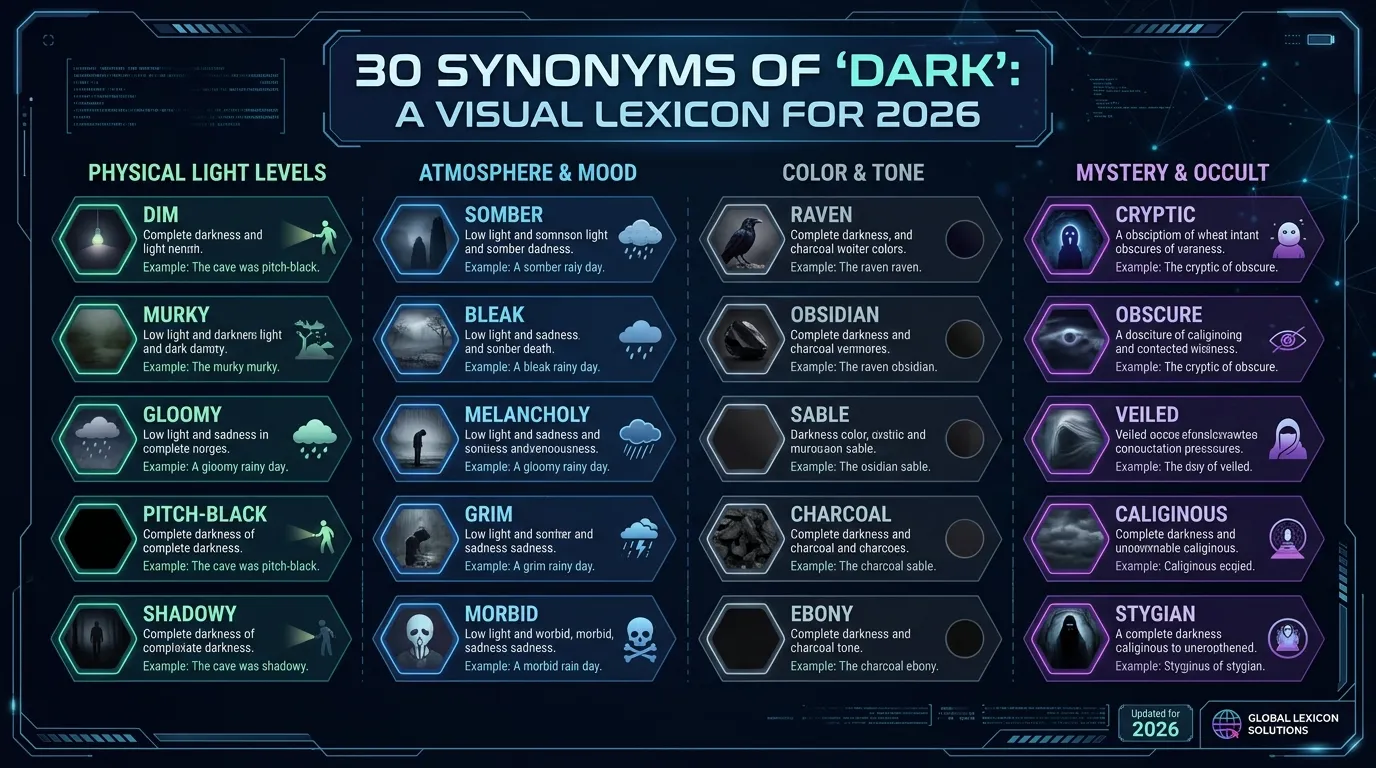
- Low-light conditions: Dim, Dusky, Twilight, Lightless
- Complete darkness: Pitch-black, Black, Inky, Nightlike
- Weather-related darkness: Cloudy, Overcast, Foggy, Hazy, Misty
- Mood and emotion: Gloomy, Somber, Sombre, Bleak, Dreary
- Mystery and secrecy: Shadowy, Murky, Tenebrous, Cryptic, Obscure
- Danger and fear: Sinister, Brooding
- Shade and cover: Shady
- Color and appearance: Obsidian, Opaque, Dull
Antonyms of Dark
- Bright (Adjective): Full of light.
- Light (Adjective): Not dark.
- Radiant (Adjective): Shining strongly.
- Luminous (Adjective): Producing light.
- Brilliant (Adjective): Very bright.
- Sunny (Adjective): Full of sunlight.
- Glowing (Adjective): Giving off light.
- Shining (Adjective): Reflecting light.
- Clear (Adjective): Easy to see through.
- Illuminated (Adjective): Lighted up.
Short Questions and Answers
- What does dark mean?
Dark means having little or no light. - When should dark be used?
Use it to describe places, colors, moods, or situations that lack brightness. - Is dark positive or negative?
It can be positive, negative, or neutral depending on the context. - How is it different from similar words?
Dark is a general word. Synonyms such as gloomy, murky, or pitch-black provide more specific meanings.
Conclusion
Learning the Synonyms of Dark and Synonyms of Dark is an excellent way to improve English vocabulary. These alternative words help writers and speakers express ideas more accurately and creatively. Using different synonyms also prevents repetition and makes communication more engaging. Understanding pronunciation, history, meaning, and connotation helps learners choose the right word for the right situation. Whether you are a student, ESL learner, teacher, blogger, or content writer, expanding your knowledge of synonyms can strengthen both writing and speaking skills. Practice using a few new words every day, and your English confidence will continue to grow.