The word happy is one of the most common words in English. It describes a feeling of pleasure, joy, satisfaction, or contentment. Imagine receiving good news about a job, passing an important exam, or spending time with loved ones. In these situations, you would probably feel happy.
People use this word every day because it helps express positive emotions. However, using the same word repeatedly can make speaking and writing sound repetitive. Learning synonyms of happy helps English learners, students, writers, and content creators communicate more effectively and naturally.
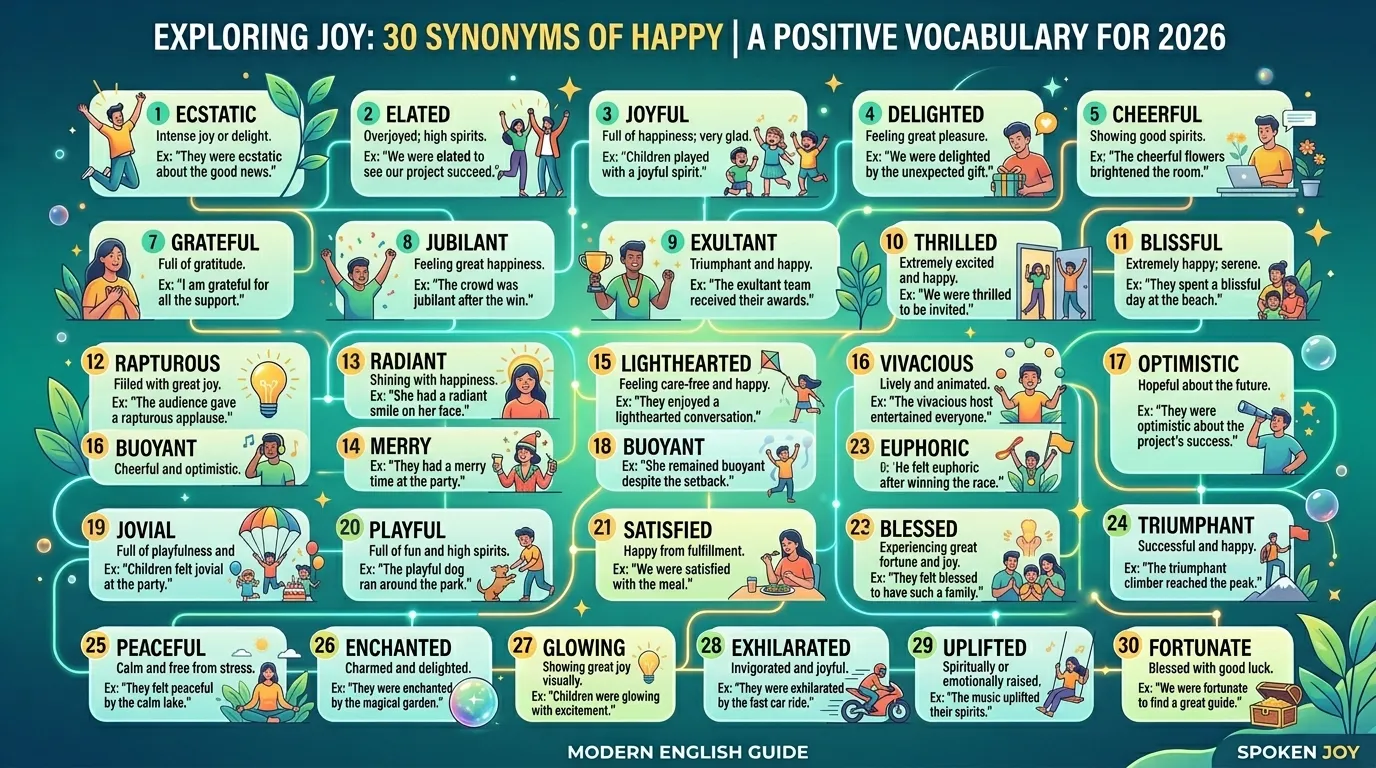
This article explains the meaning of happy, its pronunciation, history, grammar, and semantic features. You will also discover 30 powerful synonyms with meanings and examples, helping you expand your vocabulary and improve your English skills.
Meaning of Happy
Happy (Adjective):
A feeling of pleasure, joy, satisfaction, or contentment.
Examples
- She felt happy after receiving the good news.
- We are happy to spend time with our family.
Connotative Meaning
- Positive tone: Joyful, pleased, cheerful, satisfied.
- Negative tone: Rarely negative, but may suggest being overly pleased in some contexts.
- Neutral tone: Simply describes a pleasant emotional state.
Etymology
- Origin: Old Norse
- Source word: happ
- Original meaning: Luck, fortune, or chance
Short History of the Keyword
- Old English (450–1100): The exact word happy was not commonly used. Related ideas focused on luck and fortune.
- Middle English (1100–1500): Happy developed from the Norse concept of good fortune.
- Modern English (1500–Present): Happy became widely used to describe feelings of pleasure and satisfaction.
Pronunciation (US & UK – IPA)
US: /ˈhæpi/
UK: /ˈhæpi/
Syllables
hap-py
Affixation Pattern of Happy
Root: happy
Prefix: None
Suffix: None
Word Formation of Happy
- Happy (Adjective)
- Happily (Adverb)
- Happiness (Noun)
- Unhappy (Adjective)
- Unhappily (Adverb)
- Unhappiness (Noun)
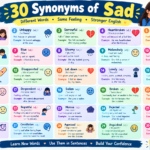
30 Synonyms of Happy
1. Joyful (Adjective)
US: /ˈdʒɔɪfəl/ | UK: /ˈdʒɔɪfəl/
Meaning: Full of great happiness and delight.
Examples:
- She felt joyful after meeting her old friend.
- The children were joyful during the celebration.
2. Cheerful (Adjective)
US: /ˈtʃɪrfəl/ | UK: /ˈtʃɪəfəl/
Meaning: Noticeably happy and positive.
Examples:
- He always has a cheerful smile.
- Her cheerful attitude inspired everyone.
3. Delighted (Adjective)
US: /dɪˈlaɪtɪd/ | UK: /dɪˈlaɪtɪd/
Meaning: Extremely pleased.
Examples:
- I was delighted to hear the news.
- They were delighted with the results.
4. Glad (Adjective)
US: /ɡlæd/ | UK: /ɡlæd/
Meaning: Feeling pleasure or satisfaction.
Examples:
- I am glad you came.
- She was glad to help.
5. Pleased (Adjective)
US: /pliːzd/ | UK: /pliːzd/
Meaning: Feeling satisfaction.
Examples:
- He looked pleased with his work.
- We are pleased to welcome you.
6. Content (Adjective)
US: /kənˈtent/ | UK: /kənˈtent/
Meaning: Quietly satisfied and happy.
Examples:
- She felt content with her life.
- The baby looked content.
7. Elated (Adjective)
US: /ɪˈleɪtɪd/ | UK: /ɪˈleɪtɪd/
Meaning: Extremely happy and excited.
Examples:
- He was elated after winning.
- They felt elated by the success.
8. Ecstatic (Adjective)
US: /ɪkˈstætɪk/ | UK: /ɪkˈstætɪk/
Meaning: Overwhelmingly happy.
Examples:
- She was ecstatic about the award.
- The fans were ecstatic after the victory.
9. Jubilant (Adjective)
US: /ˈdʒuːbɪlənt/ | UK: /ˈdʒuːbɪlənt/
Meaning: Showing great happiness and celebration.
Examples:
- The crowd was jubilant.
- Workers were jubilant after the announcement.
10. Thrilled (Adjective)
US: /θrɪld/ | UK: /θrɪld/
Meaning: Very excited and happy.
Examples:
- I was thrilled to meet her.
- They were thrilled by the opportunity.
11. Merry (Adjective)
US: /ˈmeri/ | UK: /ˈmeri/
Meaning: Cheerfully happy.
Examples:
- Everyone had a merry holiday.
- The group remained merry all evening.
12. Blissful (Adjective)
US: /ˈblɪsfəl/ | UK: /ˈblɪsfəl/
Meaning: Perfectly happy.
Examples:
- They enjoyed a blissful vacation.
- The peaceful morning felt blissful.
13. Overjoyed (Adjective)
US: /ˌoʊvərˈdʒɔɪd/ | UK: /ˌəʊvəˈdʒɔɪd/
Meaning: Extremely happy.
Examples:
- She was overjoyed by the surprise.
- We were overjoyed to see him.
14. Euphoric (Adjective)
US: /juːˈfɔːrɪk/ | UK: /juːˈfɒrɪk/
Meaning: Feeling intense happiness.
Examples:
- The team felt euphoric after winning.
- He became euphoric when he heard the news.
15. Upbeat (Adjective)
US: /ˈʌpbiːt/ | UK: /ˈʌpbiːt/
Meaning: Optimistic and cheerful.
Examples:
- She remained upbeat all day.
- His upbeat personality is attractive.
16. Sunny (Adjective)
US: /ˈsʌni/ | UK: /ˈsʌni/
Meaning: Cheerful and bright in mood.
Examples:
- She has a sunny disposition.
- His sunny attitude helped others.
17. Optimistic (Adjective)
US: /ˌɑːptɪˈmɪstɪk/ | UK: /ˌɒptɪˈmɪstɪk/
Meaning: Expecting positive outcomes.
Examples:
- She feels optimistic about the future.
- He remained optimistic despite challenges.
18. Satisfied (Adjective)
US: /ˈsætɪsfaɪd/ | UK: /ˈsætɪsfaɪd/
Meaning: Happy because expectations were met.
Examples:
- Customers were satisfied with the service.
- I felt satisfied after finishing the task.
19. Buoyant (Adjective)
US: /ˈbɔɪənt/ | UK: /ˈbɔɪənt/
Meaning: Cheerful and confident.
Examples:
- Her buoyant mood was contagious.
- He stayed buoyant during difficult times.
20. Lighthearted (Adjective)
US: /ˌlaɪtˈhɑːrtɪd/ | UK: /ˌlaɪtˈhɑːtɪd/
Meaning: Cheerful and carefree.
Examples:
- The movie was lighthearted and fun.
- She remained lighthearted throughout the trip.
21. Gleeful (Adjective)
US: /ˈɡliːfəl/ | UK: /ˈɡliːfəl/
Meaning: Full of joy and excitement.
Examples:
- The children were gleeful.
- He gave a gleeful laugh.
22. Radiant (Adjective)
US: /ˈreɪdiənt/ | UK: /ˈreɪdiənt/
Meaning: Showing happiness through appearance.
Examples:
- She looked radiant on her wedding day.
- His radiant smile brightened the room.
23. Exuberant (Adjective)
US: /ɪɡˈzuːbərənt/ | UK: /ɪɡˈzjuːbərənt/
Meaning: Energetically happy.
Examples:
- The crowd was exuberant.
- Children became exuberant at the party.
24. Carefree (Adjective)
US: /ˈkerfriː/ | UK: /ˈkeəfriː/
Meaning: Free from worries.
Examples:
- They enjoyed a carefree afternoon.
- Her carefree attitude impressed everyone.
25. Grateful (Adjective)
US: /ˈɡreɪtfəl/ | UK: /ˈɡreɪtfəl/
Meaning: Happy because of appreciation.
Examples:
- I am grateful for your help.
- She felt grateful for the opportunity.
26. Chipper (Adjective)
US: /ˈtʃɪpər/ | UK: /ˈtʃɪpə/
Meaning: Cheerful and lively.
Examples:
- He sounded chipper this morning.
- She remained chipper despite the rain.
27. Animated (Adjective)
US: /ˈænəmeɪtɪd/ | UK: /ˈænɪmeɪtɪd/
Meaning: Full of energy and enthusiasm.
Examples:
- They had an animated discussion.
- She looked animated and happy.
28. Joyous (Adjective)
US: /ˈdʒɔɪəs/ | UK: /ˈdʒɔɪəs/
Meaning: Full of joy.
Examples:
- It was a joyous occasion.
- The family shared a joyous moment.
29. Happy-go-lucky (Adjective)
US: /ˌhæpiɡoʊˈlʌki/ | UK: /ˌhæpiɡəʊˈlʌki/
Meaning: Cheerfully unconcerned.
Examples:
- He has a happy-go-lucky nature.
- Her happy-go-lucky attitude attracts friends.
30. Enchanted (Adjective)
US: /ɪnˈtʃæntɪd/ | UK: /ɪnˈtʃɑːntɪd/
Meaning: Delighted and charmed.
Examples:
- We were enchanted by the garden.
- She felt enchanted by the experience.
Prototype Meaning
The most typical meaning of happy is feeling good, pleased, and satisfied. When people hear the word happy, they usually imagine someone smiling, enjoying life, receiving good news, or spending time with people they love.
Prototype Categorization
- General Happiness: Glad, Pleased, Joyful, Cheerful, Happy
- Extreme Happiness: Ecstatic, Euphoric, Overjoyed, Elated, Jubilant
- Peaceful Happiness: Content, Blissful, Satisfied, Carefree
- Excited Happiness: Thrilled, Gleeful, Exuberant, Animated
- Positive Personality: Sunny, Upbeat, Chipper, Optimistic
- Special Occasion Happiness: Delighted, Joyous, Merry, Radiant
Antonyms of Happy
- Sad (Adjective): Feeling unhappy or sorrowful.
- Miserable (Adjective): Very unhappy.
- Depressed (Adjective): Feeling deep sadness.
- Gloomy (Adjective): Feeling dark or unhappy.
- Upset (Adjective): Emotionally disturbed.
- Disappointed (Adjective): Unhappy because expectations were not met.
- Heartbroken (Adjective): Deeply sad because of loss.
- Melancholy (Adjective): Quietly sad.
- Unhappy (Adjective): Not happy.
- Despairing (Adjective): Having no hope.
Short Questions and Answers
- What does happy mean?Happy means feeling pleasure, joy, satisfaction, or contentment.
- When should happy be used?Use happy when describing positive feelings, pleasant experiences, or satisfaction.
- Is happy positive or negative?Happy is usually positive because it expresses pleasant emotions and well-being.
- How is it different from similar words?Happy is a general word. Words like ecstatic, delighted, and joyful express stronger or more specific forms of happiness.
Conclusion
Learning the Synonyms of Happy and Synonyms of Happy is an excellent way to build a stronger English vocabulary. Instead of repeating the same word, you can choose more precise alternatives such as joyful, delighted, content, ecstatic, or cheerful. These words make speaking and writing more interesting and effective.
Understanding meanings, pronunciation, connotations, and categories also helps learners use words correctly in different situations. A rich vocabulary improves communication, strengthens writing skills, and increases confidence in everyday English. Practice using one new synonym each day in conversations, emails, or writing exercises. Over time, these words will become a natural part of your English vocabulary and help you express yourself more clearly and accurately.