Love means a strong, warm feeling of caring for someone or something. Think about a mother holding her new baby for the first time. She feels a deep, warm feeling in her heart. That feeling is love.
People use this word every day. They use it for family, friends, pets, food, hobbies, and more. It is one of the most powerful and most used words in English.
But saying “love” again and again can make writing feel plain. English learners and writers need other words too. Synonyms of love to help show different kinds of love, like quiet caring or deep passion. They also help your writing feel more real and true.
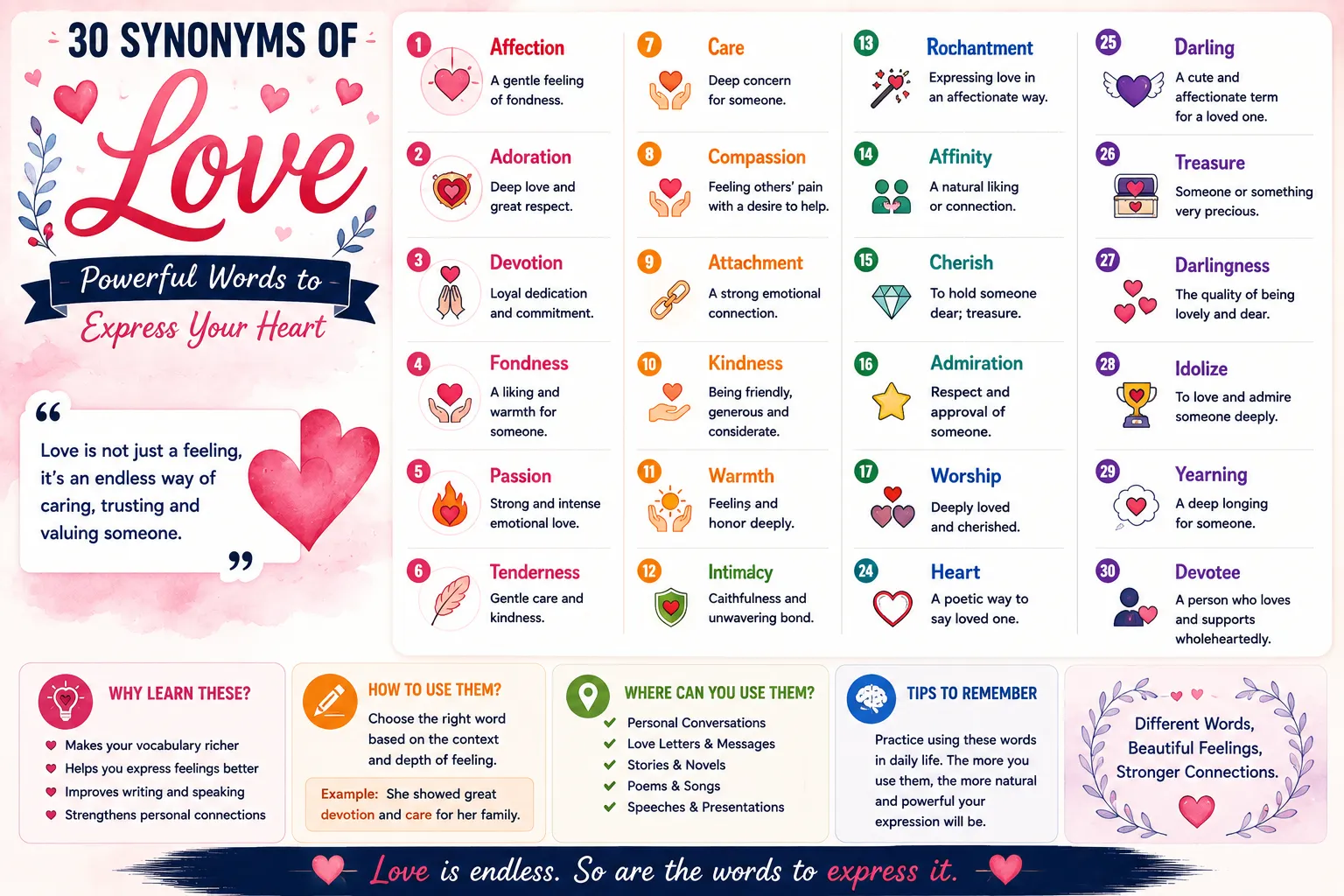
This article looks at the word “love” in a simple way. You will learn what it means, how to say it, where it came from, and how to use it. Then you will learn 30 other words that mean almost the same thing.
Meaning of Love
Definition
Love (noun): A strong feeling of deep care, warmth, or affection for someone or something.
Examples
- Her love for her children never changes.
- He felt love for his hometown even after moving away.
Connotative Meaning
- Positive tone: “Love” almost always feels warm, kind, and deeply positive. It shows care and joy.
- Negative tone: “Love” is rarely negative. It can feel painful in phrases like “love lost,” which shows sadness or grief.
- Neutral tone: In casual talk, “love” can sound light, like “I love this song,” without deep emotion.
Etymology
- “Love” comes from the Old English word lufu, which meant love, affection, or friendliness.
- This word came from an old Germanic root, related to a Latin word meaning “it is pleasing.”
- The word has kept a similar meaning for over a thousand years: a warm feeling toward someone or something.
Short History
- Old English (450–1100): “Lufu” was already a common word. It described love between family, friends, and even between people and God.
- Middle English (1100–1500): The word became “love,” staying close to its old meaning. It grew popular in poems and songs about romance.
- Modern English (1500–Present): “Love” kept its core meaning but grew wider. Today, it can describe romantic love, family love, friendship, and even love for hobbies or food.
Pronunciation (US & UK – IPA)
- US: /lʌv/
- UK: /lʌv/
Syllables
love (one syllable)
Affixation Pattern of Love
- Root: love
- Prefix: be- (used in the word “beloved,” meaning much loved)
- Suffix: -ly (makes the adjective “lovely”), -able (makes the adjective “lovable”), -er (makes the noun “lover”)
Word formation: This root gives us several words. “Love” works as both a noun and a verb. “Lovely” is an adjective that means pleasing or beautiful. “Lovable” is an adjective that means easy to love. “Lover” is a noun that means someone who loves. “Beloved” is used as both an adjective and a noun.
Synonyms of Love
1. Affection (noun) — US /əˈfɛkʃən/ | UK /əˈfɛkʃən/
Meaning: A gentle, warm feeling of caring for someone. Examples:
- She showed great affection for her grandmother.
- His affection for the dog grew every day.
2. Adoration (noun) — US /ˌædəˈreɪʃən/ | UK /ˌædəˈreɪʃən/
Meaning: Deep love and admiration for someone. Examples:
- The fans showed their adoration for the singer.
- His adoration for his wife never faded.
3. Devotion (noun) — US /dɪˈvoʊʃən/ | UK /dɪˈvəʊʃən/
Meaning: Strong love shown through loyal, caring actions. Examples:
- Her devotion to her family was clear to everyone.
- He worked with devotion to help others.
4. Fondness (noun) — US /ˈfɑːndnəs/ | UK /ˈfɒndnəs/
Meaning: A gentle, warm liking for someone or something. Examples:
- She has a fondness for old books.
- His fondness for his hometown never went away.
5. Tenderness (noun) — US /ˈtɛndərnəs/ | UK /ˈtɛndənəs/
Meaning: A soft, gentle, caring feeling. Examples:
- She spoke with tenderness to the crying child.
- His tenderness made everyone feel safe.
6. Passion (noun) — US /ˈpæʃən/ | UK /ˈpæʃən/
Meaning: A strong, deep feeling of love or excitement. Examples:
- Their passion for each other grew over time.
- She paints with real passion.
7. Warmth (noun) — US /wɔːrmθ/ | UK /wɔːmθ/
Meaning: A kind, friendly, loving feeling toward others. Examples:
- She greeted everyone with warmth.
- His warmth made new students feel welcome.
8. Attachment (noun) — US /əˈtætʃmənt/ | UK /əˈtætʃmənt/
Meaning: A strong feeling of connection or love toward someone. Examples:
- The child formed a strong attachment to her toy.
- His attachment to his old home was hard to explain.
9. Infatuation (noun) — US /ɪnˌfætʃuˈeɪʃən/ | UK /ɪnˌfætʃuˈeɪʃən/
Meaning: A strong but often short feeling of love, mostly at the start. Examples:
- Her infatuation with him faded after a few weeks.
- It was just an infatuation, not real love.
10. Admiration (noun) — US /ˌædməˈreɪʃən/ | UK /ˌædməˈreɪʃən/
Meaning: A feeling of love mixed with deep respect. Examples:
- He felt admiration for his brave sister.
- The students showed admiration for their teacher.
11. Caring (noun) — US /ˈkɛrɪŋ/ | UK /ˈkeərɪŋ/
Meaning: Kind concern shown through love and attention. Examples:
- Her caring for her patients made her a great nurse.
- His caring nature made him easy to love.
12. Closeness (noun) — US /ˈkloʊsnəs/ | UK /ˈkləʊsnəs/
Meaning: A strong feeling of connection with someone. Examples:
- The two sisters shared a deep closeness.
- Years of friendship built their closeness.
13. Intimacy (noun) — US /ˈɪntɪməsi/ | UK /ˈɪntɪməsi/
Meaning: A deep, close, and personal feeling of love or connection. Examples:
- Their intimacy grew stronger with each year of marriage.
- The letter showed a deep intimacy between the friends.
14. Worship (noun) — US /ˈwɜːrʃɪp/ | UK /ˈwɜːʃɪp/
Meaning: Deep, strong love, often like praise or devotion. Examples:
- The fans treated the singer with worship.
- His worship of his mentor shaped his whole career.
15. Yearning (noun) — US /ˈjɜːrnɪŋ/ | UK /ˈjɜːnɪŋ/
Meaning: A deep wish or longing for someone or something. Examples:
- Her yearning for home grew during the long trip.
- He felt a quiet yearning for his old friends.
16. Longing (noun) — US /ˈlɔːŋɪŋ/ | UK /ˈlɒŋɪŋ/
Meaning: A strong wish to be near someone you love. Examples:
- She wrote letters full of longing for her family.
- His longing for the countryside never went away.
17. Desire (noun) — US /dɪˈzaɪər/ | UK /dɪˈzaɪə/
Meaning: A strong feeling of wanting someone or something. Examples:
- Her desire to help others led her to nursing.
- His desire for his hometown pulled him back each year.
18. Sentiment (noun) — US /ˈsɛntɪmənt/ | UK /ˈsɛntɪmənt/
Meaning: A tender feeling, often love or fondness. Examples:
- The old photo brought back warm sentiment.
- Her sentiment for her first home stayed strong.
19. Loyalty (noun) — US /ˈlɔɪəlti/ | UK /ˈlɔɪəlti/
Meaning: Strong, faithful love and support for someone. Examples:
- His loyalty to his family never wavered.
- She showed great loyalty to her old friends.
20. Regard (noun) — US /rɪˈɡɑːrd/ | UK /rɪˈɡɑːd/
Meaning: A feeling of respect and care for someone. Examples:
- She holds her teacher in high regard.
- His regard for his coworkers made him a good leader.
21. Esteem (noun) — US /ɪˈstiːm/ | UK /ɪˈstiːm/
Meaning: A feeling of love and respect for someone’s worth. Examples:
- The team held their captain in great esteem.
- Her esteem for her parents grew over the years.
22. Attraction (noun) — US /əˈtrækʃən/ | UK /əˈtrækʃən/
Meaning: A strong pull of interest or love toward someone. Examples:
- Their attraction to each other grew slowly over time.
- She felt an instant attraction to the quiet town.
23. Romance (noun) — US /roʊˈmæns/ | UK /rəʊˈmæns/
Meaning: Loving, often exciting feelings between two people. Examples:
- Their romance began in college.
- The story is full of romance and adventure.
24. Endearment (noun) — US /ɪnˈdɪrmənt/ | UK /ɪnˈdɪəmənt/
Meaning: A loving feeling or word, often shown through kindness. Examples:
- He spoke with such endearment to his grandmother.
- Her small acts of endearment made him smile.
25. Rapture (noun) — US /ˈræptʃər/ | UK /ˈræptʃə/
Meaning: A feeling of great love and joy, often very strong. Examples:
- She looked at her baby with pure rapture.
- His rapture for music showed in every song he wrote.
26. Ardor (noun) — US /ˈɑːrdər/ | UK /ˈɑːdə/
Meaning: Strong, warm, passionate love or feeling. Examples:
- He spoke about his hometown with real ardor.
- Her ardor for painting never faded.
27. Compassion (noun) — US /kəmˈpæʃən/ | UK /kəmˈpæʃən/
Meaning: Deep care and kindness for someone who is hurting. Examples:
- She treated the sick child with great compassion.
- His compassion for others made him a kind doctor.
28. Kinship (noun) — US /ˈkɪnʃɪp/ | UK /ˈkɪnʃɪp/
Meaning: A close, loving bond, often like family. Examples:
- The old friends felt a deep kinship.
- She found kinship with others who shared her hobby.
29. Idolization (noun) — US /ˌaɪdələˈzeɪʃən/ | UK /ˌaɪdəlaɪˈzeɪʃən/
Meaning: A strong love and admiration, almost like worship. Examples:
- The young fan’s idolization of the actor was clear.
- His idolization of his father shaped his choices.
30. Care (noun) — US /kɛr/ | UK /keə/
Meaning: A gentle feeling of love shown through attention and help. Examples:
- Her care for her patients never stopped.
- He showed great care for his younger siblings.
Prototype Meaning
When people hear the word “love,” they often picture a warm feeling toward someone close to them, like a parent, a partner, or a close friend. It brings to mind care, warmth, and closeness. This simple, warm picture sits at the center of the word. Other synonyms add detail, showing whether the love is quiet and gentle, deep and lasting, or strong and passionate.
Prototype Categorization
You can group these synonyms by the kind of love they show:
- Gentle, everyday love: affection, fondness, tenderness, warmth, care, caring
- Deep, lasting love: devotion, loyalty, attachment, kinship, closeness
- Strong, passionate love: passion, romance, ardor, rapture, desire
- Love with respect: admiration, esteem, regard, worship, idolization
- Wishing to be near someone: yearning, longing, attraction, infatuation
- Kind, caring love toward others: compassion, sentiment, endearment
Antonyms of Love
hate, dislike, hatred, indifference, disgust, contempt
Short Questions and Answers
- What does “love” mean? It means a strong, warm feeling of caring for someone or something.
- When should “love” be used? Use it to describe deep care for family, friends, partners, or things you enjoy.
- Is “love” positive or negative? It is almost always positive. It can feel sad only when linked to loss, like “lost love.”
- How is it different from similar words? “Love” is broad and strong. “Affection” is softer and calmer. “Passion” shows more heat and excitement. “Compassion” focuses on kindness toward someone’s pain.
Conclusion
Synonyms of love will help your English grow strong. Each word shows a different kind of caring, from a gentle “fondness” to a deep “devotion.” Synonyms of love help your writing sound true and full of feeling, not repeated. They also help you say exactly what kind of love you mean, whether it is calm, strong, or full of respect. Anyone learning English can use synonyms of love to speak and write with more heart. Try to learn one new word each day. Use it in a sentence about someone or something you care about. Over time, this small habit will make your English much stronger.