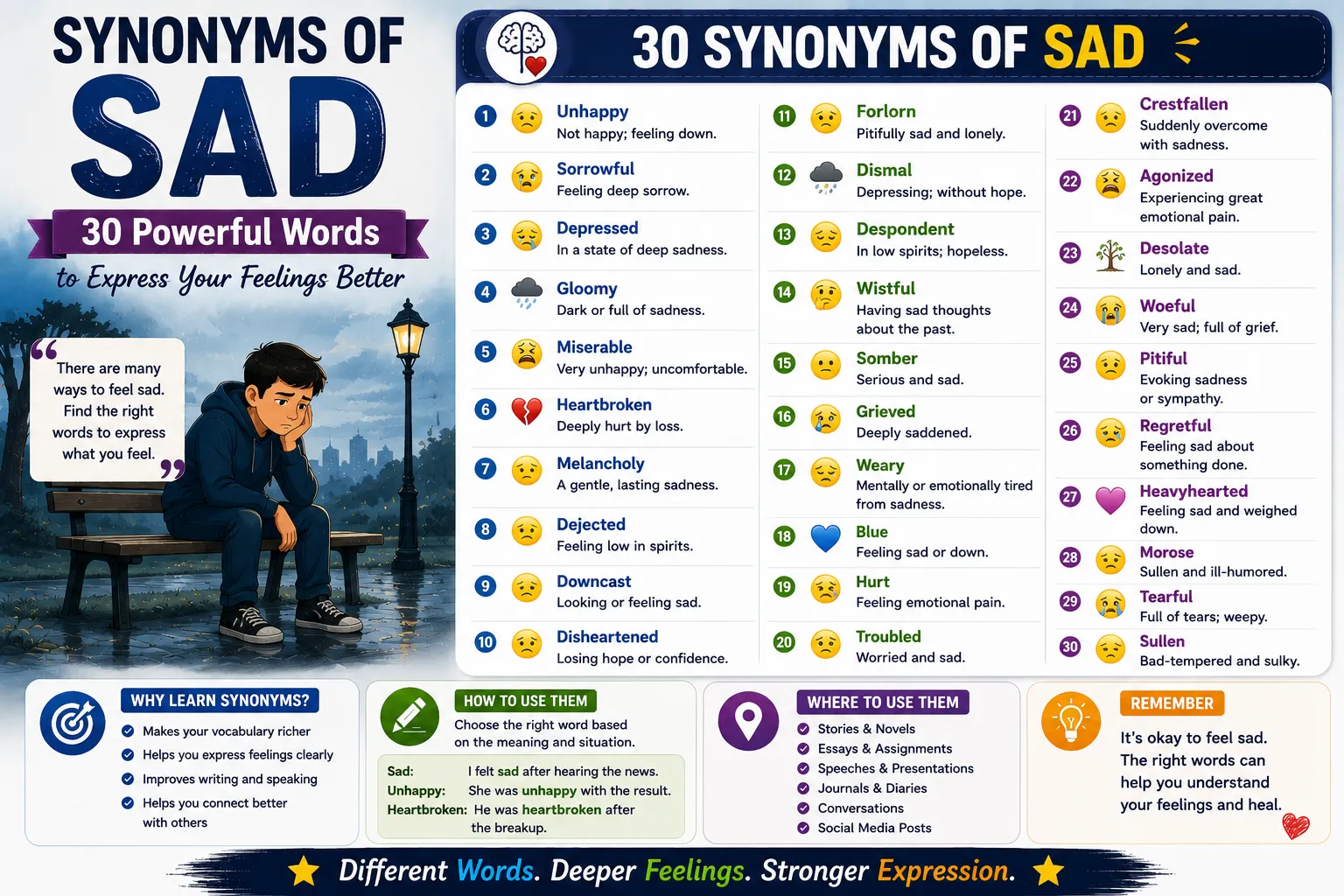
The word sad means feeling or showing sorrow, unhappiness, or gloom. Imagine a young boy standing in the rain after his favorite ice cream cone slips out of his hand and falls onto the dirty sidewalk. He looks down at the melted scoop with a drooping face, feeling completely sad about his ruined treat. Synonyms of sad used because disappointment, loss, and difficult emotional moments happen in everyday life. Learning synonyms of sad is necessary for English learners and content writers. Synonyms of sad also improve their vocabulary and describe precise feelings in their writing. This complete guide explores the true meaning of sad. Its top synonyms using clear examples, grammar facts, word origins, pronunciation guides, and semantic categories.
Meaning of Sad
Definition
Sad (Adjective): Feeling, expressing, or causing sorrow, unhappiness, or grief.
Examples
She felt very sad after saying goodbye to her childhood friend at the airport.
The gloomy weather and gray clouds made the afternoon feel quiet and sad.
Connotative Meaning
- Positive tone: Rarely positive, but can carry a sweet, reflective, or deeply empathetic tone in artistic stories or poetry.
- Negative tone: Strongly negative, as it brings to mind heartbreak, pain, loss, crying, and disappointment.
- Neutral tone: Used in simple descriptive statements, such as identifying a sad tone of voice or a sad movie genre.
Etymology
- Source language: Comes from Old English sæt, which meant satisfied, sated, or full.
- Old English (450–1100): Used as sæd to describe being full to the point of weariness or heavy exhaustion.
- Middle English (1100–1500): Shifted meaning toward serious, firm, or heavy in spirit.
- Modern English (1500–Present): Evolved into its modern sense of feeling unhappy, sorrowful, or downcast.
Pronunciation
- US: /ˈsæd/
- UK: /ˈsæd/
Syllables
sad
Affixation Pattern of Sad
- Root: Sad
- Prefix: None
- Suffix: None
- Word Formation:
- Verb: Sadden
- Adjective: Sad, Saddened, Sadder, Saddest
- Adverb: Sadly
- Noun: Sadness
Synonyms of Sad
1. Unhappy (Adjective) — US: /ʌnˈhæpi/ | UK: /ʌnˈhæpi/
Meaning: Feeling or showing a lack of joy, pleasure, or contentment.
Examples:
The young child was unhappy when his favorite toy broke.
She gave an unhappy sigh as she opened her difficult homework.
2. Sorrowful (Adjective) — US: /ˈsɔːroʊfəl/ | UK: /ˈsɒrəʊfl/
Meaning: Full of deep sadness, grief, or emotional pain.
Examples:
He sang a sorrowful song about leaving his hometown.
Her sorrowful eyes showed how much she missed her family.
3. Gloomy (Adjective) — US: /ˈɡluːmi/ | UK: /ˈɡluːmi/
Meaning: Feeling dark, low in spirits, or lacking hope.
Examples:
The rainy dark weather put everyone in a gloomy mood.
He sat alone in the room with a gloomy look on his face.
4. Melancholy (Adjective) — US: /ˈmɛlənˌkɑːli/ | UK: /ˈmelənkəli/
Meaning: Feeling a quiet, thoughtful, and long-lasting sadness.
Examples:
Soft piano music often creates a gentle, melancholy feel.
She felt melancholy as she looked at old family photographs.
5. Downcast (Adjective) — US: /ˈdaʊnˌkæst/ | UK: /ˈdaʊnkɑːst/
Meaning: Looking downward or feeling low in spirits due to disappointment.
Examples:
The team walked off the field with downcast faces after losing.
His downcast mood showed that he did not get the new job.
6. Dejected (Adjective) — US: /dɪˈdʒɛktɪd/ | UK: /dɪˈdʒektɪd/
Meaning: Feeling sad, low, and dispirited from a sudden failure or rejection.
Examples:
He felt dejected after his application was turned down.
She sat dejected on the bench after missing the bus.
7. Miserable (Adjective) — US: /ˈmɪzərəbəl/ | UK: /ˈmɪzrəbl/
Meaning: Very unhappy, uncomfortable, or living in poor conditions.
Examples:
Having a bad fever made him feel completely miserable all day.
Cold rain made the long outdoor wait feel miserable.
8. Despondent (Adjective) — US: /dɪˈspɑːndənt/ | UK: /dɪˈspɒndənt/
Meaning: Feeling extreme sadness and a complete loss of hope.
Examples:
The farmer felt despondent when his crops dried up in the sun.
She became despondent after failing her driving test twice.
9. Heartbroken (Adjective) — US: /ˈhɑːrtˌbroʊkən/ | UK: /ˈhɑːtbrakən/
Meaning: Suffering from intense sorrow, grief, or a broken heart.
Examples:
He was heartbroken when his beloved pet dog passed away.
The heartbroken family held each other tight during the storm.
10. Crestfallen (Adjective) — US: /ˈkrɛstˌfɔːlən/ | UK: /ˈkrestfɔːlən/
Meaning: Sad and disappointed after expecting a good result that failed.
Examples:
The child was crestfallen when the outdoor trip was canceled.
She looked crestfallen when she saw her final test score.
11. Gloomy (Adjective) — US: /ˈɡluːmi/ | UK: /ˈɡluːmi/
Meaning: Feeling dark, low in spirits, or lacking light and cheer.
Examples:
The gloomy sky showed that a heavy storm was coming soon.
He held a gloomy view of his chances to win the game.
12. Somber (Adjective) — US: /ˈsɑːmbɚ/ | UK: /ˈsɒmbə/
Meaning: Serious, dark, and heavy with quiet sadness.
Examples:
The quiet crowd remained somber during the memorial event.
He wore a somber black suit to the solemn meeting.
13. Woeful (Adjective) — US: /ˈwoʊfəl/ | UK: /ˈwəʊfl/
Meaning: Full of grief, misery, or severe misfortune.
Examples:
The lost puppy let out a woeful cry in the night.
She told a woeful story about her hard journey.
14. Disconsolate (Adjective) — US: /dɪsˈkɑːnsələt/ | UK: /dɪsˈkɒnsələt/
Meaning: So sad and unhappy that nothing can bring comfort.
Examples:
The disconsolate boy wept after losing his special ring.
She remained disconsolate for hours after the bad news arrived.
15. Glum (Adjective) — US: /ɡlʌm/ | UK: /ɡlʌm/
Meaning: Silent, moody, and visibly sad or disappointed.
Examples:
He sat at his desk looking glum after the meeting ended.
Why do you look so glum on such a sunny morning?
16. Mournful (Adjective) — US: /ˈmɔːrnfəl/ | UK: /ˈmɔːnfl/
Meaning: Expressing or feeling grief for someone or something lost.
Examples:
The howling wind made a mournful sound through the trees.
She wore a mournful expression throughout the quiet service.
17. Downhearted (Adjective) — US: /ˌdaʊnˈhɑːrtɪd/ | UK: /ˌdaʊnˈhɑːtɪd/
Meaning: Having a heavy heart and feeling discouraged.
Examples:
Do not feel downhearted just because your first try failed.
The downhearted players quietly walked back to the locker room.
18. Heavyhearted (Adjective) — US: /ˌhɛviˈhɑːrtɪd/ | UK: /ˌheviˈhɑːtɪd/
Meaning: Feeling weighed down by deep emotional sadness or worry.
Examples:
She packed her bags with a heavyhearted feeling on her last day.
He gave a heavyhearted goodbye to his old neighbors.
19. Tearful (Adjective) — US: /ˈtɪrfəl/ | UK: /ˈtɪəfl/
Meaning: Crying or about to shed tears from strong emotional sorrow.
Examples:
She gave a tearful hug to her sister before boarding the plane.
His tearful reaction showed how deeply the story touched him.
20. Doleful (Adjective) — US: /ˈdoʊlfəl/ | UK: /ˈdəʊlfl/
Meaning: Expressing sorrow or mournful unhappiness in sound or look.
Examples:
The hound gave a doleful howl when left alone outside.
He looked at his burnt dinner with a doleful face.
21. Dismal (Adjective) — US: /ˈdɪzməl/ | UK: /ˈdɪzməl/
Meaning: Causing or feeling sadness, gloom, or poor quality.
Examples:
The dismal weather ruined our plans for a weekend picnic.
Low sales made it a dismal quarter for the small shop.
22. Blue (Adjective) — US: /bluː/ | UK: /bluː/
Meaning: Feeling low in energy, slightly sad, or mildly depressed.
Examples:
He feels a bit blue whenever winter nights arrive early.
Listening to cheerful songs helps when you are feeling blue.
23. Low (Adjective) — US: /loʊ/ | UK: /ləʊ/
Meaning: Having little energy, mood, or emotional spirit.
Examples:
Her spirits were low after receiving the tough exam results.
He felt low all day because he did not sleep well.
24. Forlorn (Adjective) — US: /fɚˈlɔːrn/ | UK: /fəˈlɔːn/
Meaning: Sad, lonely, and feeling left behind or abandoned.
Examples:
A forlorn cat sat crying on the empty porch step.
He looked forlorn standing alone in the large crowd.
25. Cheeerless (Adjective) — US: /ˈtʃɪrləs/ | UK: /ˈtʃɪələs/
Meaning: Lacking brightness, joy, warmth, or good spirits.
Examples:
The dark and cheerless room needed bright yellow paint.
Winter days can feel cheerless without sun and warmth.
26. Inconsolable (Adjective) — US: /ˌɪnkənˈsoʊləbəl/ | UK: /ˌɪnkənˈsəʊləbl/
Meaning: Experiencing sadness so intense that comfort cannot help.
Examples:
The young child was inconsolable after losing her red balloon.
He was inconsolable when his long life dream came to an end.
27. Grievous (Adjective) — US: /ˈɡriːvəs/ | UK: /ˈɡriːvəs/
Meaning: Causing severe pain, deep grief, or serious sorrow.
Examples:
Losing their family home was a grievous blow to everyone.
The accident brought grievous emotional pain to the town.
28. Wretched (Adjective) — US: /ˈrɛtʃɪd/ | UK: /ˈretʃɪd/
Meaning: Living in extreme misery, poor state, or deep sadness.
Examples:
He felt wretched after realizing he made a big mistake.
The cold and wet shelter was a wretched place to sleep.
29. Depressed (Adjective) — US: /dɪˈprɛst/ | UK: /dɪˈprest/
Meaning: Feeling unhappy, low in mood, and lacking energy or hope over time.
Examples:
She felt depressed after staying inside for a rainy week.
The sad movie left many viewers feeling quiet and depressed.
30. Morose (Adjective) — US: /məˈroʊs/ | UK: /məˈrəʊs/
Meaning: Sullen, ill-tempered, and quietly gloomy in mood.
Examples:
He turned morose and stopped talking after he lost the game.
Her morose mood made it hard for friends to cheer her up.
Prototype Meaning
When people hear the word sad, they usually picture a person sitting alone with tears in their eyes. It represents a state of low emotional energy where joy is missing, leaving behind a heavy feeling of loss.
Prototype Categorization
- Mild or Casual Unhappiness: Unhappy, Glum, Blue, Low, Cheerless.
- Visible Disappointment: Downcast, Dejected, Crestfallen, Downhearted, Heavyhearted.
- Deep Sorrow and Grief: Sorrowful, Heartbroken, Mournful, Tearful, Doleful, Grievous.
- Gloom and Darkness: Gloomy, Melancholy, Somber, Dismal, Morose.
- Extreme Misery and Loss of Hope: Miserable, Despondent, Disconsolate, Forlorn, Inconsolable, Wretched, Depressed, Woeful.
Antonyms of Sad
- Happy
- Joyful
- Cheerful
- Delighted
- Glad
- Elated
- Content
Short Questions and Answers
- What does “sad” mean?
“Sad” means feeling, showing, or causing unhappiness, sorrow, or a lack of emotional joy. - When should “sad” be used?
Use “sad” when describing everyday disappointment, gloomy weather, emotional loss, or unhappy events. - Is “sad” positive or negative?
“Sad” is generally negative, though it can carry a gentle, reflective tone in poetry or emotional storytelling. - How is it different from similar words?
“Sad” is a broad general term, whereas “heartbroken” shows severe personal loss and “gloomy” emphasizes dark mood or weather.
CONCLUSION
Synonyms of sad improves your English vocabulary. Expanding your vocabulary allows you to describe mild disappointment. Also deep heartbreak, and dark moods with high precision. Synonyms of sad like crestfallen for failed plans, gloomy for dark weather, or heartbroken for personal loss. Synonyms of sad eliminates repetitive phrasing, sharpens your writing style, and builds lasting English confidence. Make a plan to practice a few new synonyms each day in your reading, writing, and conversations.