Ugly means not pleasant to look at. Think about an old, broken chair left out in the rain. Its paint is peeling, and one leg is bent. Most people would call it ugly.
People use synonyms for ugly a lot, for objects, buildings, and sometimes feelings, like an ugly fight. It is a common word used to show that something does not look good.
But saying “ugly” again and again can make writing feel plain or even harsh. English learners and writers need other words synonyms for ugly more clear and thoughtful.
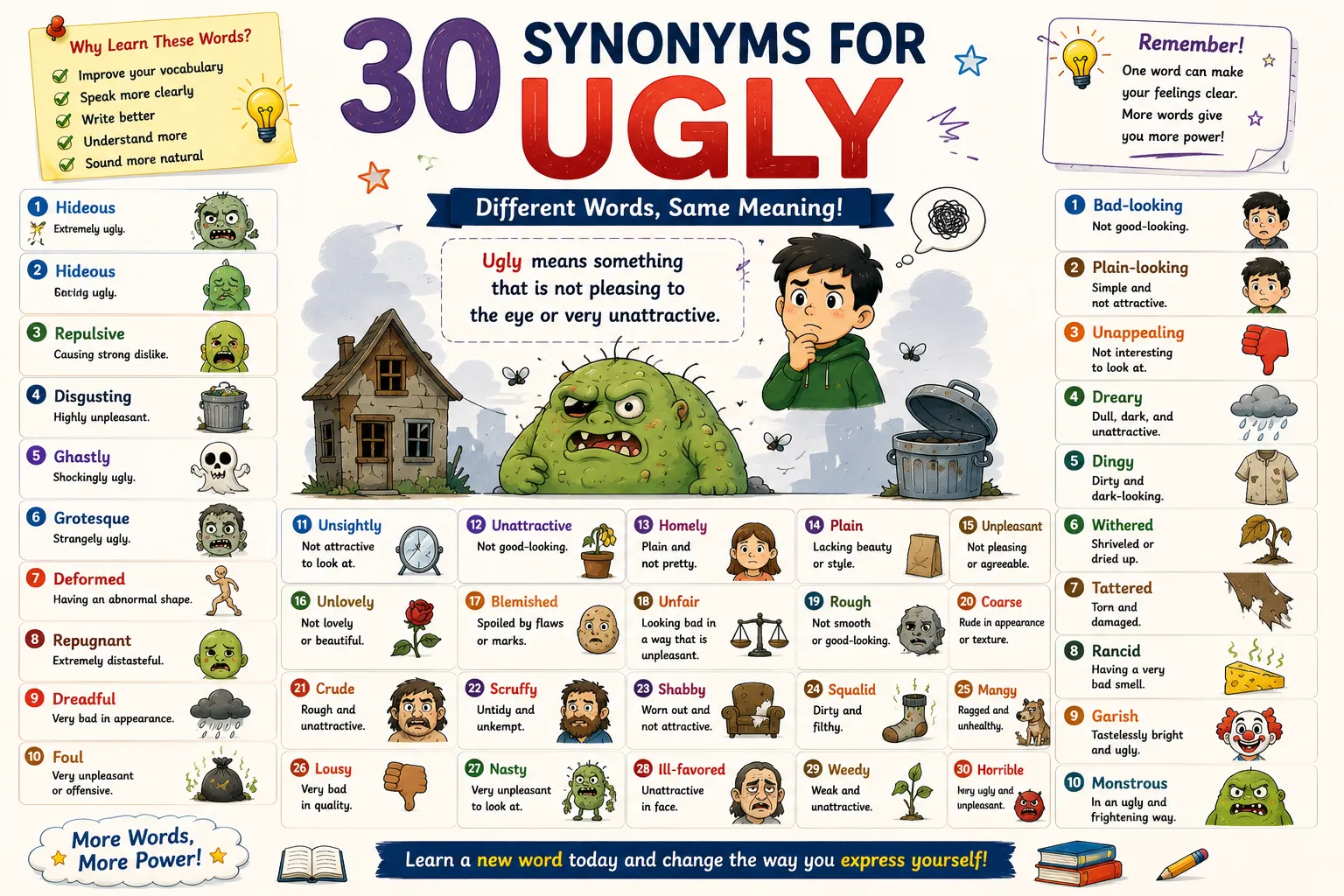
This article looks at the word “ugly” in a simple way. You will learn what it means, how to say it, where it came from, and how to use it. Then you will learn 30 other words that mean almost the same thing.
Meaning of Ugly
Definition
Ugly (adjective): Not pleasant to look at; unattractive.
Examples
- The old building looked ugly next to the new houses.
- She thought the shoes were ugly, but she still bought them.
Connotative Meaning
- Positive tone: “Ugly” is almost never positive. It shows dislike or discomfort.
- Negative tone: “Ugly” usually feels harsh and blunt. It can hurt feelings if said about a person.
- Neutral tone: In simple facts, “ugly” can describe something plainly, like “the old sign looked ugly and worn.”
Etymology
- “Ugly” comes from the Old Norse word uggligr, which meant dreadful or fearful.
- This word came from “uggr,” meaning fear or dread, joined with a suffix that formed adjectives.
- At first, “ugly” meant something frightening, not just something unpleasant to look at.
Short History
- Old English (450–1100): The word “ugly” did not exist yet. People used words like “unfæger,” meaning “not fair” or “not beautiful.”
- Middle English (1100–1500): “Ugly” entered English from Old Norse around the 1200s. It first meant frightening or dreadful, close to its old root meaning.
- Modern English (1500–Present): The meaning of “ugly” narrowed over time. It moved from “frightening” to simply “unattractive,” which is how we use it today.
Pronunciation (US & UK – IPA)
- US: /ˈʌɡli/
- UK: /ˈʌɡli/
Syllables
ug-ly
Affixation Pattern of Ugly
- Root: ugly (from Old Norse “uggligr,” meaning dreadful)
- Prefix: none common
- Suffix: -ness (makes the noun “ugliness”)
Word formation: This root gives us a few related words. “Ugly” is an adjective. “Ugliness” is a noun that means the state of being ugly. “Uglier” and “ugliest” are the comparative and superlative forms.
Synonyms of Ugly
1. Unattractive (adjective) — US /ˌʌnəˈtræktɪv/ | UK /ˌʌnəˈtræktɪv/
Meaning: Not pleasing to look at. Examples:
- The old car looked unattractive after years of use.
- She found the wallpaper pattern unattractive.
2. Hideous (adjective) — US /ˈhɪdiəs/ | UK /ˈhɪdiəs/
Meaning: Extremely ugly, often shocking to see. Examples:
- The hideous monster scared the children in the story.
- He thought the statue was hideous up close.
3. Unsightly (adjective) — US /ʌnˈsaɪtli/ | UK /ʌnˈsaɪtli/
Meaning: Unpleasant to look at, often something out of place. Examples:
- The unsightly pile of trash sat by the road.
- They painted over the unsightly stain on the wall.
4. Grotesque (adjective) — US /ɡroʊˈtɛsk/ | UK /ɡrəʊˈtɛsk/
Meaning: Very ugly in a strange or unnatural way. Examples:
- The grotesque figure in the painting looked strange.
- The creature’s grotesque shape frightened the crowd.
5. Repulsive (adjective) — US /rɪˈpʌlsɪv/ | UK /rɪˈpʌlsɪv/
Meaning: So ugly it causes strong dislike. Examples:
- The repulsive smell matched the messy room.
- She found the moldy food repulsive to look at.
6. Homely (adjective) — US /ˈhoʊmli/ | UK /ˈhəʊmli/
Meaning: Plain or unattractive in a simple way. Examples:
- He described the small cabin as homely but cozy.
- She never thought of herself as homely.
7. Horrid (adjective) — US /ˈhɔːrɪd/ | UK /ˈhɒrɪd/
Meaning: Very unpleasant to look at or think about. Examples:
- The horrid weather ruined their plans.
- She wore a horrid green coat to the party.
8. Disfigured (adjective) — US /dɪsˈfɪɡjərd/ | UK /dɪsˈfɪɡəd/
Meaning: Made ugly by damage or change to its normal shape. Examples:
- The disfigured tree survived the storm.
- Years of rust had disfigured the old gate.
9. Ghastly (adjective) — US /ˈɡæstli/ | UK /ˈɡɑːstli/
Meaning: Shockingly ugly or unpleasant. Examples:
- The ghastly scene shocked everyone at the scene.
- He wore a ghastly mask for the costume party.
10. Plain (adjective) — US /pleɪn/ | UK /pleɪn/
Meaning: Simple and not attractive, but not extreme. Examples:
- The plain building had no decoration at all.
- She wore a plain dress to the casual event.
11. Unbecoming (adjective) — US /ˌʌnbɪˈkʌmɪŋ/ | UK /ˌʌnbɪˈkʌmɪŋ/
Meaning: Not flattering or attractive, often about clothing or style. Examples:
- The unbecoming haircut didn’t suit her face.
- He felt the color was unbecoming on him.
12. Frightful (adjective) — US /ˈfraɪtfəl/ | UK /ˈfraɪtfʊl/
Meaning: Extremely unpleasant or ugly, often shocking. Examples:
- The frightful mess covered the entire kitchen.
- She described the old ruins as frightful but interesting.
13. Monstrous (adjective) — US /ˈmɑːnstrəs/ | UK /ˈmɒnstrəs/
Meaning: Ugly in a huge or unnatural way. Examples:
- The monstrous machine towered over the workers.
- Its monstrous size scared everyone nearby.
14. Repugnant (adjective) — US /rɪˈpʌɡnənt/ | UK /rɪˈpʌɡnənt/
Meaning: So unpleasant it causes strong dislike, often formal. Examples:
- The repugnant smell filled the abandoned house.
- He found the design repugnant and outdated.
15. Distasteful (adjective) — US /dɪsˈteɪstfəl/ | UK /dɪsˈteɪstfʊl/
Meaning: Unpleasant to see or experience. Examples:
- She found the loud colors distasteful.
- The distasteful joke made the room go quiet.
16. Gruesome (adjective) — US /ˈɡruːsəm/ | UK /ˈɡruːsəm/
Meaning: Extremely ugly and shocking, often frightening. Examples:
- The gruesome scene in the movie made her look away.
- The old photo showed a gruesome accident site.
17. Vile (adjective) — US /vaɪl/ | UK /vaɪl/
Meaning: Extremely unpleasant, disgusting to look at or experience. Examples:
- The vile smell came from the old fridge.
- He described the room’s condition as vile.
18. Foul (adjective) — US /faʊl/ | UK /faʊl/
Meaning: Very unpleasant, often dirty or ugly. Examples:
- The foul water made the pond unsafe.
- A foul smell filled the old basement.
19. Deformed (adjective) — US /dɪˈfɔːrmd/ | UK /dɪˈfɔːmd/
Meaning: Not shaped normally, often appearing ugly because of it. Examples:
- The deformed branch bent in an odd direction.
- The toy had a deformed shape after melting.
20. Uncomely (adjective) — US /ʌnˈkʌmli/ | UK /ʌnˈkʌmli/
Meaning: Not attractive, an old-fashioned word. Examples:
- The story described the house as uncomely but sturdy.
- He wore an uncomely old hat to the field.
21. Ill-favored (adjective) — US /ˈɪl ˈfeɪvərd/ | UK /ˈɪl ˈfeɪvəd/
Meaning: Unattractive in appearance, an older term. Examples:
- The tale described an ill-favored old troll.
- She thought the design looked ill-favored and strange.
22. Unglamorous (adjective) — US /ʌnˈɡlæmərəs/ | UK /ʌnˈɡlæmərəs/
Meaning: Plain and not appealing, lacking style. Examples:
- The office had an unglamorous, gray look.
- She wore an unglamorous but comfortable outfit.
23. Off-putting (adjective) — US /ˈɔːf ˈpʊtɪŋ/ | UK /ˈɒf ˈpʊtɪŋ/
Meaning: Unpleasant enough to make you want to look away. Examples:
- The off-putting smell kept customers from entering.
- His off-putting design choice confused the team.
24. Disgusting (adjective) — US /dɪsˈɡʌstɪŋ/ | UK /dɪsˈɡʌstɪŋ/
Meaning: Extremely unpleasant, causing a strong negative reaction. Examples:
- The disgusting mess covered the entire floor.
- She found the moldy bread disgusting.
25. Revolting (adjective) — US /rɪˈvoʊltɪŋ/ | UK /rɪˈvəʊltɪŋ/
Meaning: So unpleasant it causes disgust. Examples:
- The revolting smell came from the trash bin.
- He described the scene as revolting.
26. Odious (adjective) — US /ˈoʊdiəs/ | UK /ˈəʊdiəs/
Meaning: Extremely unpleasant, often causing strong dislike. Examples:
- The odious wallpaper made the room feel cramped.
- She called the old carpet odious and outdated.
27. Unlovely (adjective) — US /ʌnˈlʌvli/ | UK /ʌnˈlʌvli/
Meaning: Not pleasant to look at, a soft way to say ugly. Examples:
- The unlovely building blocked the view.
- He described the weather as gray and unlovely.
28. Unseemly (adjective) — US /ʌnˈsiːmli/ | UK /ʌnˈsiːmli/
Meaning: Not proper or attractive, often about behavior or appearance. Examples:
- The unseemly stain ruined the photo.
- She thought the loud pattern was unseemly for the event.
29. Unphotogenic (adjective) — US /ˌʌnfoʊtəˈdʒɛnɪk/ | UK /ˌʌnfəʊtəˈdʒɛnɪk/
Meaning: Not looking good in photos. Examples:
- He joked that the old building was unphotogenic.
- She felt unphotogenic in most of her school pictures.
30. Butt-ugly (adjective) — US /ˈbʌt ˈʌɡli/ | UK /ˈbʌt ˈʌɡli/
Meaning: Extremely ugly, used in very casual speech. Examples:
- He called the old sofa butt-ugly.
- The house was butt-ugly, but it had a great yard.
Prototype Meaning
When people hear the word “ugly,” they usually picture something that looks wrong, or unpleasant in some way. It could be an old, worn object, a strange shape, or something messy. This simple picture of something unpleasant to look at sits at the center of the word. Other synonyms add detail, showing whether the ugliness is mild, shocking, or even frightening.
Also read more about https://myprayerss.com/synonyms-for-bad/
Prototype Categorization
- Mild or plain ugliness: plain, homely, unattractive, unglamorous, unlovely, unphotogenic
- Strong ugliness: hideous, unsightly, unbecoming, distasteful, unseemly
- Shocking or extreme ugliness: grotesque, ghastly, frightful, gruesome, monstrous
- Ugliness that causes disgust: repulsive, repugnant, vile, foul, disgusting, revolting, odious, off-putting
- Ugliness from damage or shape: disfigured, deformed
- Old-fashioned words for ugly: uncomely, ill-favored.
Antonyms of Ugly
beautiful, attractive, pretty, gorgeous, lovely
Short Questions and Answers
- What does “ugly” mean? It means not pleasant to look at; unattractive.
- When should “ugly” be used? Use it to describe something unpleasant to see, like an object, a place, or sometimes a situation.
- Is “ugly” positive or negative? It is almost always negative. It shows dislike or discomfort.
- How is it different from similar words? “Ugly” is direct and can sound harsh. “Plain” is softer and less unkind. “Hideous” and “grotesque” show a much stronger, more shocking level of ugliness.
Conclusion
Synonyms for ugly will help your English grow strong. Each word shows a different level of unpleasant looks. From a simple “plain” style to a shocking “hideous” sight. These words help your writing sound clear and full of detail, not repeated. Synonyms for ugly also help you choose kinder or stronger words depending on the moment. Anyone learning English can use these synonyms for ugly to describe the world with more care and precision. Try to learn one new word each day. Use synonyms for ugly in a sentence about something you have seen. Over time, this small habit will make your English much stronger.