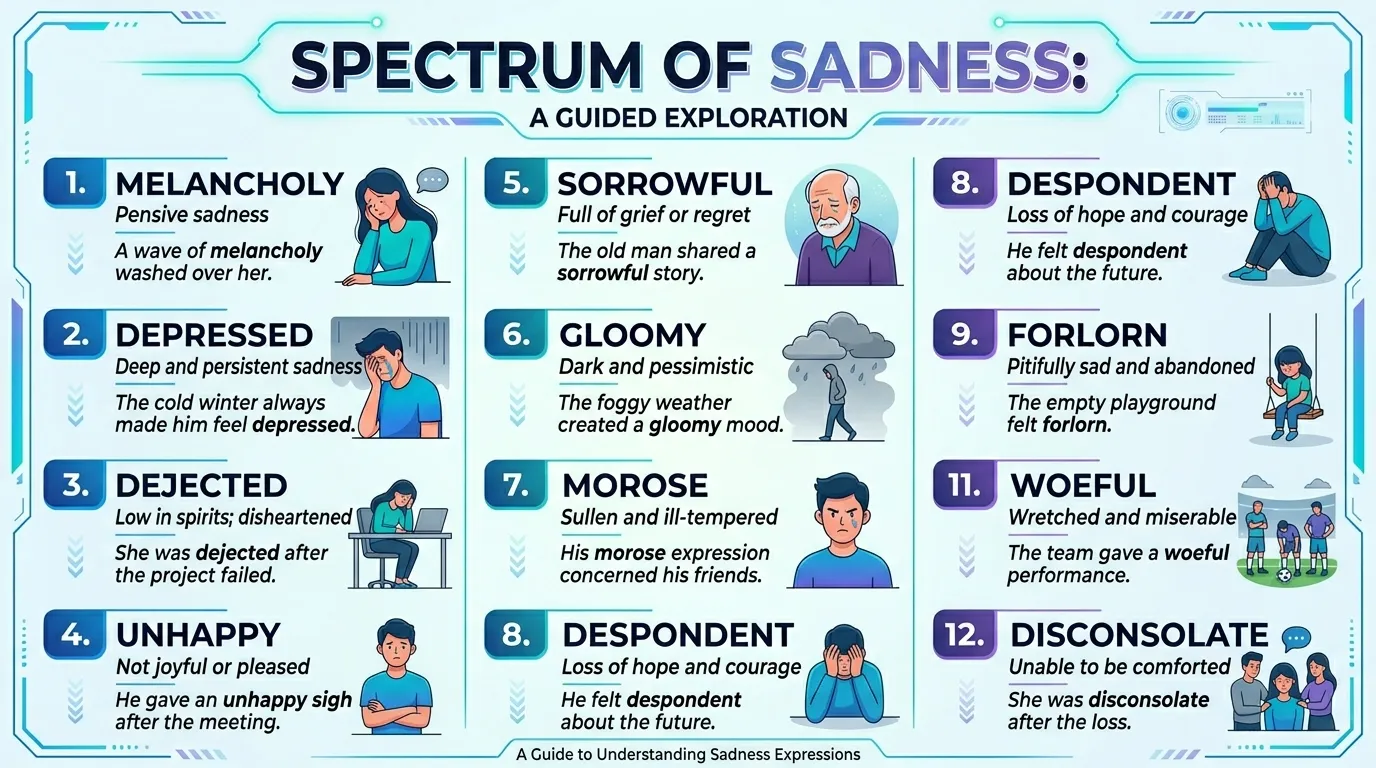
Sad is a common English word that describes a feeling of unhappiness, sorrow, or emotional pain. Imagine a student who studied hard for an exam but did not get the expected result. That student may feel sad. People use this word every day when talking about loss, disappointment, loneliness, or difficult situations.
Because sad is such a common word, English learners and writers often use it repeatedly. Learning synonyms of sad helps improve vocabulary, makes writing more interesting, and allows speakers to express emotions more accurately. Different synonyms can show different levels of sadness, from mild disappointment to deep grief. In this article, you will learn the meaning of sad, its pronunciation, history, grammar, connotations, and 30 useful synonyms with examples. This knowledge will help you write and speak English with greater confidence and precision.
Meaning of Sad
Sad (Adjective):
Feeling unhappy, sorrowful, disappointed, or emotionally troubled.
Examples
- She felt sad after saying goodbye to her best friend.
- The movie had a sad ending that made everyone cry.
Connotative Meaning
- Positive tone: Can show sensitivity, compassion, or emotional depth.
- Negative tone: Often suggests sorrow, pain, grief, or disappointment.
- Neutral tone: Simply describes a state of unhappiness without strong judgment.
Etymology
- Origin: Old English sæd
- Original meaning: Satisfied, weary, full
- Later meaning: Heavy-hearted, sorrowful
Short History of the Keyword
- Old English (450–1100): Used to mean satisfied, weary, or tired.
- Middle English (1100–1500): Began to develop meanings related to seriousness and sorrow.
- Modern English (1500–Present): Became widely used to mean unhappy or sorrowful.
Pronunciation (US & UK – IPA)
US: /sæd/
UK: /sæd/
Syllables
sad
Affixation Pattern of Sad
Root: sad
Prefix: None
Suffix: None
Word Formation of Sad
- sad (adjective)
- sadly (adverb)
- sadness (noun)
- sadden (verb)
- saddened (adjective/verb form)
- saddening (adjective/verb form)
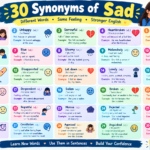
30 Synonyms of Sad
1. Unhappy (Adjective)
US: /ʌnˈhæpi/ | UK: /ʌnˈhæpi/
Meaning: Feeling not happy.
Examples:
- She felt unhappy about the decision.
- The child looked unhappy after losing his toy.
2. Sorrowful (Adjective)
US: /ˈsɔːroʊfəl/ | UK: /ˈsɒrəʊfəl/
Meaning: Full of sorrow or grief.
Examples:
- He gave a sorrowful speech.
- The family was sorrowful after the loss.
3. Miserable (Adjective)
US: /ˈmɪzərəbəl/ | UK: /ˈmɪzərəbəl/
Meaning: Extremely unhappy.
Examples:
- She felt miserable during the storm.
- He looked miserable after hearing the news.
4. Gloomy (Adjective)
US: /ˈɡluːmi/ | UK: /ˈɡluːmi/
Meaning: Feeling depressed or pessimistic.
Examples:
- The weather made everyone gloomy.
- He sounded gloomy on the phone.
5. Depressed (Adjective)
US: /dɪˈprest/ | UK: /dɪˈprest/
Meaning: Feeling very unhappy and discouraged.
Examples:
- She felt depressed after the failure.
- He became depressed during difficult times.
6. Downcast (Adjective)
US: /ˈdaʊnkæst/ | UK: /ˈdaʊnkɑːst/
Meaning: Feeling disappointed or discouraged.
Examples:
- She looked downcast after the meeting.
- His downcast face showed his feelings.
7. Melancholy (Adjective)
US: /ˈmelənkɑːli/ | UK: /ˈmelənkəli/
Meaning: Quietly sad for a long time.
Examples:
- The song had a melancholy mood.
- He felt melancholy on rainy days.
8. Heartbroken (Adjective)
US: /ˈhɑːrtbroʊkən/ | UK: /ˈhɑːtbroʊkən/
Meaning: Extremely sad because of loss.
Examples:
- She was heartbroken after the breakup.
- The family felt heartbroken.
9. Grief-stricken (Adjective)
US: /ˈɡriːfˌstrɪkən/ | UK: /ˈɡriːfˌstrɪkən/
Meaning: Deeply affected by grief.
Examples:
- The grief-stricken mother cried all day.
- He appeared grief-stricken at the funeral.
10. Dejected (Adjective)
US: /dɪˈdʒektɪd/ | UK: /dɪˈdʒektɪd/
Meaning: Feeling low and disappointed.
Examples:
- The team felt dejected after losing.
- She looked dejected after the interview.
11. Blue (Adjective)
US: /bluː/ | UK: /bluː/
Meaning: Informally feeling sad.
Examples:
- I feel a little blue today.
- He sounded blue on the call.
12. Mournful (Adjective)
US: /ˈmɔːrnfəl/ | UK: /ˈmɔːnfəl/
Meaning: Expressing sadness or grief.
Examples:
- The mournful music filled the room.
- She gave a mournful glance.
13. Woeful (Adjective)
US: /ˈwoʊfəl/ | UK: /ˈwəʊfəl/
Meaning: Full of sadness.
Examples:
- His face had a woeful expression.
- The story was woeful.
14. Despairing (Adjective)
US: /dɪˈsperɪŋ/ | UK: /dɪˈspeərɪŋ/
Meaning: Having little hope.
Examples:
- She felt despairing about the future.
- He gave a despairing sigh.
15. Crestfallen (Adjective)
US: /ˈkrestˌfɔːlən/ | UK: /ˈkrestˌfɔːlən/
Meaning: Sad because of disappointment.
Examples:
- He looked crestfallen after the rejection.
- She became crestfallen when she lost.
16. Dismal (Adjective)
US: /ˈdɪzməl/ | UK: /ˈdɪzməl/
Meaning: Very gloomy and sad.
Examples:
- The atmosphere was dismal.
- It was a dismal day.
17. Low (Adjective)
US: /loʊ/ | UK: /ləʊ/
Meaning: Feeling unhappy.
Examples:
- I feel low today.
- She seemed low after the argument.
18. Sullen (Adjective)
US: /ˈsʌlən/ | UK: /ˈsʌlən/
Meaning: Quietly unhappy and unfriendly.
Examples:
- He sat in a sullen mood.
- The boy remained sullen all evening.
19. Somber (Adjective)
US: /ˈsɑːmbər/ | UK: /ˈsɒmbə/
Meaning: Serious and sad.
Examples:
- The ceremony was somber.
- Her voice sounded somber.
20. Forlorn (Adjective)
US: /fərˈlɔːrn/ | UK: /fəˈlɔːlən/
Meaning: Lonely and sad.
Examples:
- The dog looked forlorn.
- He felt forlorn after moving away.
21. Brokenhearted (Adjective)
US: /ˌbroʊkənˈhɑːrtɪd/ | UK: /ˌbrəʊkənˈhɑːtɪd/
Meaning: Deeply sad due to emotional loss.
Examples:
- She was brokenhearted after the separation.
- He felt brokenhearted for months.
22. Regretful (Adjective)
US: /rɪˈɡretfəl/ | UK: /rɪˈɡretfəl/
Meaning: Feeling sadness about past actions.
Examples:
- She was regretful about her mistake.
- He gave a regretful smile.
23. Distressed (Adjective)
US: /dɪˈstrest/ | UK: /dɪˈstrest/
Meaning: Upset and worried.
Examples:
- The news left her distressed.
- He looked distressed during the discussion.
24. Hurt (Adjective)
US: /hɜːrt/ | UK: /hɜːt/
Meaning: Emotionally pained.
Examples:
- She felt hurt by the comment.
- He was hurt by their actions.
25. Weeping (Adjective)
US: /ˈwiːpɪŋ/ | UK: /ˈwiːpɪŋ/
Meaning: Crying because of sadness.
Examples:
- The weeping child missed his mother.
- She was weeping quietly.
26. Tearful (Adjective)
US: /ˈtɪrfəl/ | UK: /ˈtɪəfəl/
Meaning: Full of tears.
Examples:
- She gave a tearful goodbye.
- His eyes became tearful.
27. Anguished (Adjective)
US: /ˈæŋɡwɪʃt/ | UK: /ˈæŋɡwɪʃt/
Meaning: Experiencing severe emotional pain.
Examples:
- She gave an anguished cry.
- His face looked anguished.
28. Wretched (Adjective)
US: /ˈretʃɪd/ | UK: /ˈretʃɪd/
Meaning: Very unhappy or unfortunate.
Examples:
- He felt wretched after the mistake.
- She looked wretched and tired.
29. Morose (Adjective)
US: /məˈroʊs/ | UK: /məˈrəʊs/
Meaning: Quietly sad and gloomy.
Examples:
- He remained morose all day.
- Her morose mood worried friends.
30. Bereaved (Adjective)
US: /bɪˈriːvd/ | UK: /bɪˈriːvd/
Meaning: Suffering from the death of a loved one.
Examples:
- The bereaved family received support.
- She comforted the bereaved parents.
Prototype Meaning
The prototype meaning of sad is a feeling of unhappiness caused by loss, disappointment, failure, loneliness, or emotional pain. When people hear the word sad, they usually imagine someone feeling down, crying, or dealing with a difficult situation.
Prototype Categorization
- Mild Sadness: unhappy, blue, low, downcast
- Disappointment: crestfallen, dejected, regretful
- Deep Emotional Pain: heartbroken, brokenhearted, anguished
- Grief and Loss: sorrowful, bereaved, grief-stricken, mournful
- Gloomy Mood: gloomy, melancholy, morose, somber
- Extreme Unhappiness: miserable, wretched, despairing
- Loneliness: forlorn
- Emotional Distress: distressed, hurt, tearful
Antonyms of Sad
- Happy (Adjective): Feeling pleasure and joy.
- Cheerful (Adjective): Noticeably happy and positive.
- Joyful (Adjective): Full of joy.
- Delighted (Adjective): Extremely pleased.
- Content (Adjective): Satisfied and peaceful.
- Optimistic (Adjective): Expecting good outcomes.
- Glad (Adjective): Feeling pleased.
- Thrilled (Adjective): Extremely excited and happy.
- Upbeat (Adjective): Positive and energetic.
- Elated (Adjective): Very happy and excited.
Short Questions and Answers
- What does sad mean?
Sad means feeling unhappy, sorrowful, or emotionally hurt. - When should sad be used?
Use sad when describing feelings of unhappiness, disappointment, loss, or emotional pain. - Is sad positive or negative?
Sad usually has a negative emotional tone because it describes unhappiness. - How is it different from similar words?
Sad is a general word. Synonyms such as heartbroken, melancholy, and bereaved express more specific kinds or levels of sadness.
Conclusion
Learning the Synonyms of Sad and Synonyms of Sad is an excellent way to improve English vocabulary. Instead of repeating the same word, you can choose more precise expressions that match different situations and emotions. This makes writing stronger, speaking more natural, and communication more effective. Understanding meanings, pronunciation, history, connotations, and categories also helps learners use words correctly. Whether you are a student, writer, content creator, or English learner, mastering these synonyms will increase your confidence and make your language richer. Try using a new synonym each day in conversations or writing exercises to build a stronger and more expressive vocabulary.