Because we admire so many things in daily life, the word “beautiful” gets used again and again. This can make our writing and speech feel plain if we always reach for the same word. This is why English learners and content writers need synonyms. New words let you describe beauty in different, exact ways, from a gentle charm to a jaw-dropping view. They also stop your writing from repeating “beautiful” too many times.
This article covers the meaning of “beautiful,” its emotional tone, its history, its pronunciation, and its word parts. Then it gives you 30 strong synonyms with clear meanings and example sentences.
Meaning of Beautiful
Definition
Beautiful (Adjective): Very pleasing to the eye, ear, or mind; lovely to experience.
Examples
- The garden was full of beautiful flowers.
- She sang a beautiful song at the concert.
Connotative Meaning
- Positive tone: admired, pleasing, uplifting (almost all uses of the word)
- Negative tone: rare, but can sound insincere if overused in flattery (“Oh, what a beautiful excuse”)
- Neutral tone: simply describing visual appeal (“a beautiful design for the app”)
Etymology
- “Beautiful” comes from the word beauty plus the suffix -ful.
- “Beauty” traces back to the Old French word biauté, which came from the Vulgar Latin word bellitas.
- Bellitas grew from the Latin word bellus, meaning “pretty,” “handsome,” or “charming.”
Short History
- Old English (450–1100): The word “beautiful” did not exist. Speakers used native words like “fæger” (fair) or “wlitig” (lovely) to describe beauty.
- Middle English (1100–1500): After the Norman Conquest, “beauty” entered English from Old French. Later, English speakers added the native suffix “-ful” to form “beautiful.”
- Modern English (1500–Present): “Beautiful” became the standard word for physical and aesthetic beauty, widely used in literature, art, and daily speech.
Pronunciation (US & UK – IPA)
- US: /ˈbjutəfəl/
- UK: /ˈbjuːtɪfʊl/
Syllables
beau-ti-ful
Affixation Pattern of Beautiful
- Root: beauty (from Old French biauté)
- Prefix: none common
- Suffix: -ful
Word formation
From the root “beauty,” English builds several words: beautifully (adverb), beautify (verb), and beautification (noun). This shows how one root word can grow into many useful grammatical forms.
Also read morehttps://myprayerss.com/synonyms-for-rich-2/
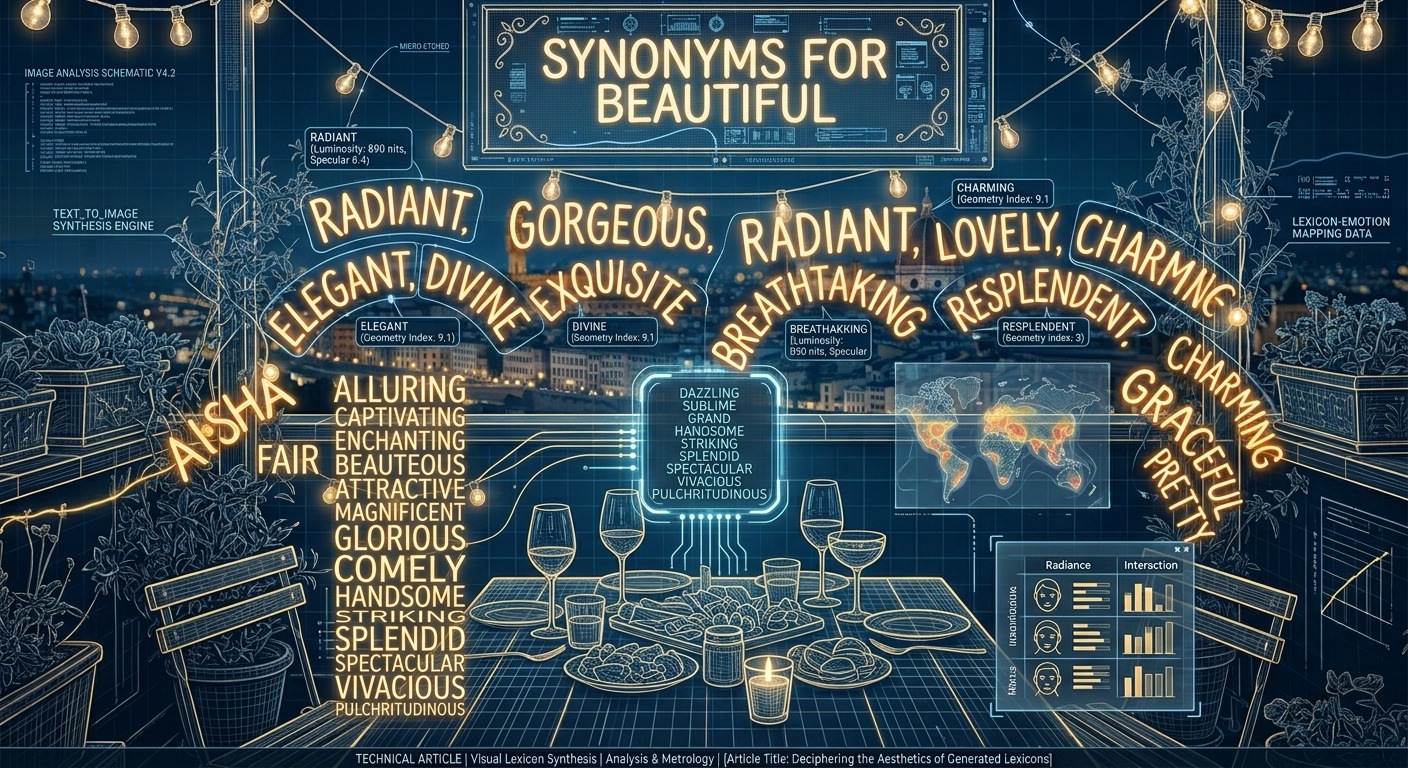
Synonyms of Beautiful
1. Gorgeous (Adjective) — US /ˈɡɔrdʒəs/ | UK /ˈɡɔːdʒəs/
Meaning: Extremely beautiful and eye-catching.
Examples:
- She wore a gorgeous red dress to the party.
- The gorgeous view stopped us in our tracks.
2. Stunning (Adjective) — US /ˈstʌnɪŋ/ | UK /ˈstʌnɪŋ/
Meaning: So beautiful that it shocks or amazes you.
Examples:
- The bride looked stunning at the wedding.
- We saw a stunning sunset over the ocean.
3. Lovely (Adjective) — US /ˈlʌvli/ | UK /ˈlʌvli/
Meaning: Pleasing and gentle in its beauty.
Examples:
- They had a lovely time at the beach.
- The garden looked lovely in spring.
4. Attractive (Adjective) — US /əˈtræktɪv/ | UK /əˈtræktɪv/
Meaning: Pleasing to look at; drawing attention.
Examples:
- The house had an attractive front garden.
- She has an attractive smile.
5. Pretty (Adjective) — US /ˈprɪti/ | UK /ˈprɪti/
Meaning: Nicely and simply beautiful.
Examples:
- The child drew a pretty picture of a flower.
- She wore a pretty necklace to school.
6. Elegant (Adjective) — US /ˈɛlɪɡənt/ | UK /ˈɛlɪɡənt/
Meaning: Beautiful in a graceful, refined way.
Examples:
- The dancer moved with elegant steps.
- Her elegant dress suited the formal event.
7. Graceful (Adjective) — US /ˈɡreɪsfəl/ | UK /ˈɡreɪsfʊl/
Meaning: Beautiful through smooth, flowing movement.
Examples:
- The swan glided in a graceful curve.
- Her graceful walk caught everyone’s eye.
8. Exquisite (Adjective) — US /ɪkˈskwɪzɪt/ | UK /ɪkˈskwɪzɪt/
Meaning: Extremely beautiful and finely made.
Examples:
- The necklace had an exquisite design.
- They admired the exquisite artwork.
9. Radiant (Adjective) — US /ˈreɪdiənt/ | UK /ˈreɪdiənt/
Meaning: Beautiful and glowing with light or joy.
Examples:
- The bride looked radiant in her gown.
- Her radiant smile lit up the room.
10. Charming (Adjective) — US /ˈtʃɑrmɪŋ/ | UK /ˈtʃɑːmɪŋ/
Meaning: Beautiful in a warm, appealing way.
Examples:
- The small town had a charming main street.
- His charming smile won her over.
11. Striking (Adjective) — US /ˈstraɪkɪŋ/ | UK /ˈstraɪkɪŋ/
Meaning: So beautiful it immediately catches your eye.
Examples:
- She had striking blue eyes.
- The building’s striking design drew visitors.
12. Magnificent (Adjective) — US /mæɡˈnɪfɪsənt/ | UK /mæɡˈnɪfɪsənt/
Meaning: Grand and beautiful on a large scale.
Examples:
- The magnificent castle sat on the hill.
- We saw a magnificent waterfall in the forest.
13. Splendid (Adjective) — US /ˈsplɛndɪd/ | UK /ˈsplɛndɪd/
Meaning: Beautiful and impressive in a grand way.
Examples:
- The palace had a splendid golden hall.
- They enjoyed a splendid view from the top.
14. Alluring (Adjective) — US /əˈlʊrɪŋ/ | UK /əˈljʊərɪŋ/
Meaning: Beautiful in a way that draws you closer.
Examples:
- The alluring city lights drew tourists at night.
- Her alluring voice filled the room.
15. Enchanting (Adjective) — US /ɪnˈtʃæntɪŋ/ | UK /ɪnˈtʃɑːntɪŋ/
Meaning: Beautiful in a magical, captivating way.
Examples:
- The enchanting forest looked like a fairy tale.
- Her enchanting singing filled the hall.
16. Dazzling (Adjective) — US /ˈdæzəlɪŋ/ | UK /ˈdæzlɪŋ/
Meaning: So beautiful it nearly blinds you with brightness or shine.
Examples:
- The dazzling fireworks lit up the sky.
- She wore a dazzling diamond necklace.
17. Ravishing (Adjective) — US /ˈrævɪʃɪŋ/ | UK /ˈrævɪʃɪŋ/
Meaning: Extremely beautiful and delightful to see.
Examples:
- She looked ravishing in her new gown.
- The ravishing scenery amazed every traveler.
18. Handsome (Adjective) — US /ˈhænsəm/ | UK /ˈhænsəm/
Meaning: Beautiful in a strong, pleasing way, often used for men.
Examples:
- He looked handsome in his new suit.
- The handsome old house had tall windows.
19. Picturesque (Adjective) — US /ˌpɪktʃəˈrɛsk/ | UK /ˌpɪktʃəˈrɛsk/
Meaning: Beautiful like a picture, especially in scenery.
Examples:
- The picturesque village sat by the river.
- We hiked through a picturesque valley.
20. Delightful (Adjective) — US /dɪˈlaɪtfəl/ | UK /dɪˈlaɪtfʊl/
Meaning: Beautiful and pleasing in a happy, charming way.
Examples:
- The delightful garden was full of butterflies.
- She had a delightful smile.
21. Divine (Adjective) — US /dɪˈvaɪn/ | UK /dɪˈvaɪn/
Meaning: So beautiful it seems heavenly or perfect.
Examples:
- The dessert tasted divine.
- Her divine voice moved the audience to tears.
22. Glamorous (Adjective) — US /ˈɡlæmərəs/ | UK /ˈɡlæmərəs/
Meaning: Beautiful in a stylish, exciting way.
Examples:
- She looked glamorous on the red carpet.
- The glamorous hotel had a golden lobby.
23. Breathtaking (Adjective) — US /ˈbrɛθˌteɪkɪŋ/ | UK /ˈbrɛθˌteɪkɪŋ/
Meaning: So beautiful it takes your breath away.
Examples:
- The breathtaking mountain view amazed us.
- Her breathtaking performance earned a standing ovation.
24. Sublime (Adjective) — US /səˈblaɪm/ | UK /səˈblaɪm/
Meaning: So beautiful it feels almost beyond words.
Examples:
- The sublime music filled the concert hall.
- They watched a sublime sunset over the sea.
25. Pleasing (Adjective) — US /ˈplizɪŋ/ | UK /ˈpliːzɪŋ/
Meaning: Nicely beautiful in a comfortable, satisfying way.
Examples:
- The garden’s pleasing colors calmed her mind.
- The room had a pleasing, simple design.
26. Fair (Adjective) — US /fɛr/ | UK /feə/
Meaning: A classic, older word for beautiful.
Examples:
- The fair maiden appeared in the old tale.
- Her fair face was known throughout the village.
27. Comely (Adjective) — US /ˈkʌmli/ | UK /ˈkʌmli/
Meaning: Pleasingly beautiful, especially in a simple, natural way.
Examples:
- The comely farmhouse sat among the fields.
- She had a comely, gentle look.
28. Angelic (Adjective) — US /ænˈdʒɛlɪk/ | UK /ænˈdʒɛlɪk/
Meaning: Beautiful in a pure, innocent way, like an angel.
Examples:
- The baby had an angelic face.
- Her angelic voice calmed the whole room.
29. Resplendent (Adjective) — US /rɪˈsplɛndənt/ | UK /rɪˈsplɛndənt/
Meaning: Beautifully bright and shining.
Examples:
- The queen appeared resplendent in gold.
- The resplendent stained glass caught the sun.
30. Statuesque (Adjective) — US /ˌstætʃuˈɛsk/ | UK /ˌstætʃuˈɛsk/
Meaning: Beautiful in a tall, graceful, statue-like way.
Examples:
- The statuesque model walked the runway.
- Her statuesque posture stood out in the room.
Prototype Meaning
When most people hear the word “beautiful,” they picture something that makes them pause and admire it, like a sunset, a face, or a perfect piece of art. It brings to mind a strong, pleasing reaction to something’s look or feel. This simple picture is the core meaning of the word. Other uses, like “a beautiful idea” or “beautiful weather,” grow out of this same basic idea of something deeply pleasing.
Prototype Categorization
- Physical appearance-related: gorgeous, stunning, pretty, attractive, handsome, striking, ravishing, comely, statuesque
- Elegance and grace-related: elegant, graceful, exquisite, charming, glamorous, sublime
- Radiance and light-related: radiant, dazzling, resplendent, divine, angelic
- Scenery and emotional impact-related: picturesque, breathtaking, magnificent, splendid, enchanting, alluring, delightful, pleasing, fair, lovely
Antonyms of Beautiful
ugly, hideous, unattractive, unsightly, plain
Short Questions and Answers
- What does “beautiful” mean?
It means very pleasing to the eye, ear, or mind; lovely to experience. - When should “beautiful” be used?
Use it to describe anything that pleases the senses, from a person’s looks to a scene, sound, or idea. - Is “beautiful” positive or negative?
It is almost always positive, since it shows admiration or delight. It can sound insincere only if overused in flattery. - How is it different from similar words?
“Pretty” often describes simple, gentle beauty, while “stunning” points to a strong, shocking impression. “Picturesque” is mostly used for scenery, and “beautiful” is the general word that covers all of these smaller shades of visual and sensory appeal.
Conclusion
Synonyms for beautiful gives you many ways to describe beauty, from a gentle charm to a breathtaking view. It helps you avoid using the same word again and again in your writing or speech. It also makes your English sound more natural and skilled. Each new synonym adds a small tool to your vocabulary kit, ready for the right moment. Try using one new synonym each day in a sentence of your own. Over time, this small habit builds real confidence in both writing and speaking English.