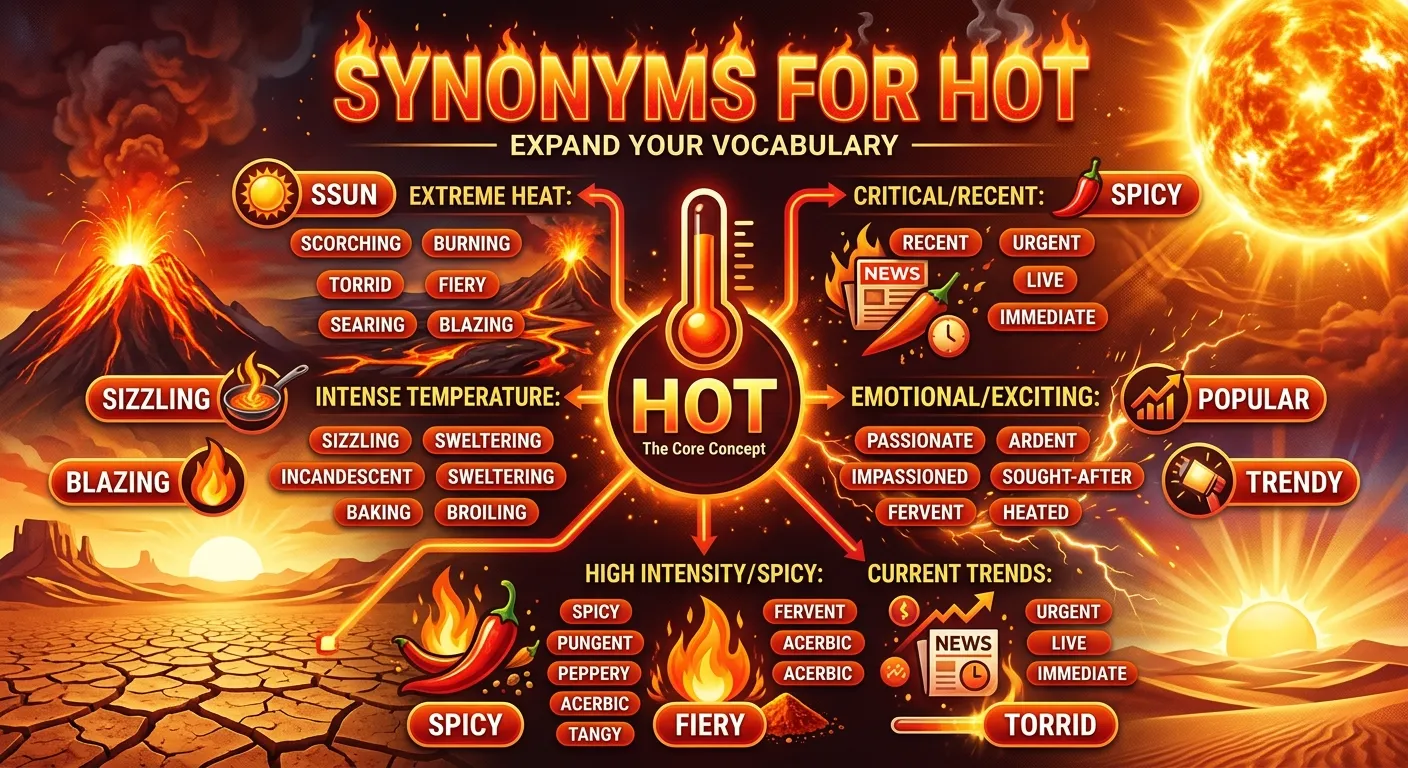
Hot means having a high temperature. On a hot day, you may feel warm, sweat, and look for a cool place. For example, you may say, “The tea is hot,” when you cannot drink it yet. The word hot is very common in English. We use it to talk about weather, food, drinks, fire, people, and even ideas. Learning synonyms for hot can help English learners use better and more exact words. It can also help content writers make their writing clear and less repetitive. In this article, we will learn the meaning of hot, its synonyms, examples, grammar, history, pronunciation, and word forms. We will also group the synonyms by meaning. This will help you choose the right word for each situation.
Meaning of Hot
Definition
Hot (Adjective): Having a high temperature or feeling very warm.
Examples
- The soup is hot, so wait before eating it.
- It is very hot outside today.
Connotative Meaning
- Positive tone: Hot can suggest excitement, strong interest, or attractiveness.
- Negative tone: Hot can suggest discomfort, danger, or anger.
- Neutral tone: Hot can simply describe something with a high temperature.
Etymology
- Source: Old English
- Old English form: hāt
- Original meaning: Having a high temperature; very warm.
- The word is related to other Germanic words that mean “hot” or “warm.”
Short History
- Old English (450–1100): Hāt was used to describe things with high heat.
- Middle English (1100–1500): The word became hot and kept its basic meaning.
- Modern English (1500–Present): Hot gained more meanings. It can now describe spicy food, attractive people, popular things, angry feelings, and exciting events.
Pronunciation (US & UK – IPA)
US: /hɑːt/
UK: /hɒt/
Syllables
hot
Affixation Pattern of Hot
- Root: hot
- Prefix: None
- Suffix: None
- Word formation: Hot is a basic root word. It can form related words such as hotter, hottest, hotly, and hotness. These forms include adjectives, adverbs, and nouns.
Also read morehttps://myprayerss.com/synonyms-of-happy-2/
Synonyms of Hot
1. Warm (Adjective) — US /wɔːrm/ | UK /wɔːm/
Meaning: Having some heat but not very hot.
Examples:
- The water is warm.
- I like a warm bath.
2. Heated (Adjective) — US /ˈhiːtɪd/ | UK /ˈhiːtɪd/
Meaning: Made hot by heat.
Examples:
- Pour the sauce into the heated pan.
- The room was heated before the guests arrived.
3. Scorching (Adjective) — US /ˈskɔːrtʃɪŋ/ | UK /ˈskɔːtʃɪŋ/
Meaning: Extremely hot.
Examples:
- It was scorching outside.
- We stayed inside on the scorching day.
4. Sweltering (Adjective) — US /ˈsweltərɪŋ/ | UK /ˈsweltərɪŋ/
Meaning: Very hot and uncomfortable.
Examples:
- The room was sweltering.
- We walked home in the sweltering heat.
5. Boiling (Adjective) — US /ˈbɔɪlɪŋ/ | UK /ˈbɔɪlɪŋ/
Meaning: Extremely hot.
Examples:
- The kitchen was boiling.
- It was boiling in the car.
6. Blazing (Adjective) — US /ˈbleɪzɪŋ/ | UK /ˈbleɪzɪŋ/
Meaning: Very hot or giving off strong heat.
Examples:
- The blazing sun made us tired.
- We walked under the blazing sun.
7. Burning (Adjective) — US /ˈbɜːrnɪŋ/ | UK /ˈbɜːnɪŋ/
Meaning: Very hot and able to hurt you.
Examples:
- The sand was burning hot.
- I touched the burning pan by mistake.
8. Fiery (Adjective) — US /ˈfaɪəri/ | UK /ˈfaɪəri/
Meaning: Very hot like fire.
Examples:
- The fire gave off fiery heat.
- The dish had a fiery taste.
9. Tepid (Adjective) — US /ˈtepɪd/ | UK /ˈtepɪd/
Meaning: Slightly warm, but not hot.
Examples:
- The water was tepid.
- I wanted hot tea, but it was only tepid.
10. Feverish (Adjective) — US /ˈfiːvərɪʃ/ | UK /ˈfiːvərɪʃ/
Meaning: Feeling very warm because of a fever.
Examples:
- The child felt feverish.
- She looked feverish and tired.
11. Torrid (Adjective) — US /ˈtɔːrɪd/ | UK /ˈtɒrɪd/
Meaning: Extremely hot and dry.
Examples:
- They lived through a torrid summer.
- The torrid weather made travel hard.
12. Sultry (Adjective) — US /ˈsʌltri/ | UK /ˈsʌltri/
Meaning: Very hot and humid.
Examples:
- It was a sultry summer evening.
- The air felt sultry and heavy.
13. Tropical (Adjective) — US /ˈtrɑːpɪkəl/ | UK /ˈtrɒpɪkəl/
Meaning: Warm or hot like the weather in tropical areas.
Examples:
- We enjoyed the tropical weather.
- The island has a tropical climate.
14. Steamy (Adjective) — US /ˈstiːmi/ | UK /ˈstiːmi/
Meaning: Full of hot steam or heat.
Examples:
- The bathroom was steamy.
- She took a steamy hot shower.
15. Sulfurous (Adjective) — US /ˈsʌlfərəs/ | UK /ˈsʌlfərəs/
Meaning: Having a strong smell like sulfur, often linked with hot volcanic areas.
Examples:
- We smelled sulfurous gas near the spring.
- The sulfurous air was hard to breathe.
16. Spicy (Adjective) — US /ˈspaɪsi/ | UK /ˈspaɪsi/
Meaning: Having a strong, hot taste from spices.
Examples:
- This curry is very spicy.
- I like spicy food.
17. Piquant (Adjective) — US /ˈpiːkənt/ | UK /ˈpiːkənt/
Meaning: Having a pleasantly strong and spicy taste.
Examples:
- The sauce has a piquant taste.
- We enjoyed the piquant flavor.
18. Peppery (Adjective) — US /ˈpepəri/ | UK /ˈpepəri/
Meaning: Having a strong taste like pepper.
Examples:
- The soup has a peppery taste.
- I like this peppery sauce.
19. Pungent (Adjective) — US /ˈpʌndʒənt/ | UK /ˈpʌndʒənt/
Meaning: Having a very strong taste or smell.
Examples:
- The cheese has a pungent smell.
- The sauce has a pungent flavor.
20. Fiery (Adjective) — US /ˈfaɪəri/ | UK /ˈfaɪəri/
Meaning: Very strong or spicy in taste.
Examples:
- He ordered a fiery curry.
- The fiery sauce was too strong for me.
21. Attractive (Adjective) — US /əˈtræktɪv/ | UK /əˈtræktɪv/
Meaning: Pleasant to look at or appealing.
Examples:
- She is very attractive.
- The new design is attractive.
22. Sexy (Adjective) — US /ˈseksi/ | UK /ˈseksi/
Meaning: Sexually attractive.
Examples:
- The actor is known for his sexy style.
- She wore a sexy dress.
23. Alluring (Adjective) — US /əˈlʊrɪŋ/ | UK /əˈlʊərɪŋ/
Meaning: Very attractive and able to draw people in.
Examples:
- The singer has an alluring voice.
- The shop had an alluring display.
24. Desirable (Adjective) — US /dɪˈzaɪərəbəl/ | UK /dɪˈzaɪərəbəl/
Meaning: Wanted because it is attractive or useful.
Examples:
- The house is in a desirable area.
- Good jobs are often desirable.
25. Popular (Adjective) — US /ˈpɑːpjələr/ | UK /ˈpɒpjʊlə/
Meaning: Liked or wanted by many people.
Examples:
- This song is very popular.
- That game is popular with children.
26. Trendy (Adjective) — US /ˈtrendi/ | UK /ˈtrendi/
Meaning: Modern and fashionable.
Examples:
- She bought a trendy jacket.
- This café is very trendy.
27. Fashionable (Adjective) — US /ˈfæʃənəbəl/ | UK /ˈfæʃənəbəl/
Meaning: Popular and in style.
Examples:
- She wore a fashionable dress.
- These shoes are fashionable now.
28. Exciting (Adjective) — US /ɪkˈsaɪtɪŋ/ | UK /ɪkˈsaɪtɪŋ/
Meaning: Making you feel happy, interested, or eager.
Examples:
- The game was exciting.
- We had an exciting weekend.
29. Intense (Adjective) — US /ɪnˈtens/ | UK /ɪnˈtens/
Meaning: Very strong or powerful.
Examples:
- The match was intense.
- She felt intense anger.
30. Fierce (Adjective) — US /fɪrs/ | UK /fɪəs/
Meaning: Very strong, powerful, or aggressive.
Examples:
- The team faced fierce competition.
- They had a fierce debate.
Note: These synonyms do not all replace hot in every sentence. Some describe temperature, some describe spicy food, and others describe attractiveness, popularity, excitement, or strong feelings.
Prototype Meaning
The most typical meaning of hot is having a high temperature. When people hear hot, they often think of the sun, hot weather, fire, tea, coffee, or food that can burn. The exact meaning depends on the sentence.
Prototype Categorization
- High temperature: warm, heated, scorching, sweltering, boiling, blazing, burning
- Heat and weather: torrid, sultry, tropical, steamy
- Spicy taste: spicy, piquant, peppery, pungent, fiery
- Attractiveness: attractive, sexy, alluring, desirable
- Popularity and fashion: popular, trendy, fashionable
- Strong feelings or action: exciting, intense, fierce
Antonyms of Hot
- Cold
- Cool
- Chilly
- Freezing
- Frigid
- Icy
- Lukewarm
- Mild
Short Questions and Answers
- What does hot mean?
Hot usually means having a high temperature. - When should hot be used?
Use hot to talk about high temperature. It can also describe spicy food, attractive people, popular things, or strong feelings. - Is hot positive or negative?
It depends on the context. Hot can be positive, negative, or neutral. - How is hot different from similar words?
Hot is a common and general word. Words like scorching mean very hot, while warm means less hot. Spicy is used mainly for food.
Conclusion
Synonyms for hot can make your English stronger. The word hot has many meanings, so it is useful to know the words that fit each meaning. Words like scorching and sweltering can describe very hot weather. Spicy and fiery can describe food. Attractive and alluring can describe a person or thing that looks appealing. Learning these words helps you write and speak with more detail. It also helps you avoid using the same word again and again. Try to learn a few new synonyms each day. Use them in short sentences and real-life conversations. With daily practice, you can build a stronger vocabulary and feel more confident when using English.